Arsenic Pesticides: History, Health Risks and Current Status
Arsenic pesticides are insecticides, fungicides, herbicides and defoliants with an inorganic or organic arsenic active ingredient. These arsenic pesticides rest on...
Read article →


MedEd Pesticide lists each pesticide’s EU and US status, safety limits and chemistry.
MedEd Pesticide copies the toxicity records from the sources listed in each row, and the wildlife results from the EPA ECOTOX Knowledgebase, where each line sums up every test with the same species, endpoint, effect and duration (minimum, median, maximum, number of results). ToxValDB marks most of them “not determined” in quality control, so they are not reviewed values. Values differ across species, routes and studies. Read the methodology and the glossary, and see the medical disclaimer.

A pesticide toxicity database is a searchable collection of test results on how pesticides harm living things. Each entry belongs to one active ingredient, the chemical that does the pest control.
Entries come from laboratory studies, field studies and regulatory reviews. The database gathers them in one place, so readers search by pesticide name instead of by report.

MedEd Pesticide stores each record with the same fields. The value comes first, with its unit and any limit sign.
Next come the species, the exposure route, the study type, the duration and the effect seen. MedEd Pesticide ends each record with its source and year.

A pesticide toxicity database reports each result as a number with a unit, and a lower lethal dose means a more toxic pesticide. Open each term below for its meaning.
The LD50 is the dose that killed half of the test animals. The LC50 is the same measure for a concentration in air or water.
The NOAEL is the highest dose with no harmful effect seen. The LOAEL is the lowest dose with an effect.
A reference dose is a daily intake estimated to carry no appreciable risk over a lifetime. Regulators derive it from studies like these.
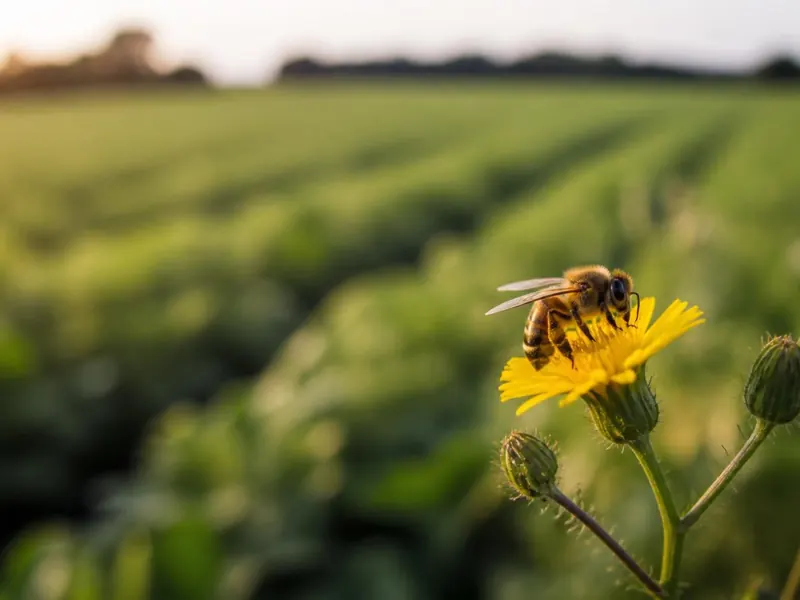
MedEd Pesticide includes tests on bees, fish, birds, water fleas, algae and plants. These show what a pesticide does outside the field it was sprayed on.
MedEd Pesticide groups the results by animal group. Matching tests are summed up as a minimum, a median and a maximum.

A pesticide toxicity database serves people who need the evidence behind a pesticide’s hazard. It does not guide treatment. In the US, call Poison Help at 1-800-222-1222 after an exposure.
Clinicians see how toxic a pesticide is and which routes of exposure the studies tested.
Occupational health staff read the limits regulators set and the effects seen at each dose.
Students and researchers compare pesticides and follow each row back to its original source.

MedEd Pesticide shows whether each active ingredient is approved in the European Union and registered with the US EPA. The same page lists the safety limits regulators set.
MedEd Pesticide matches records to the right chemical by its CAS number. Open the database to filter by type, chemical class and status.

The toxicity records come from EPA ToxValDB, which merges 16 sources. These include the EPA pesticide office, the European Food Safety Authority and the World Health Organization.
Wildlife results come from the EPA ECOTOX Knowledgebase. Every row names its source. See the full source list.

Values for one pesticide differ by species, route and study design. MedEd Pesticide lists them side by side instead of choosing one.
ToxValDB marks most records as not determined in its quality control. MedEd Pesticide passes that label on. Read the methodology for the full rules.

A low LD50 shows toxicity, not risk. Risk also depends on how much exposure happens. Animal results do not map directly to people.
A missing record does not mean a pesticide is safe. These records support education and research, not medical advice. Read the medical disclaimer and the glossary.

MedEd Pesticide describes pesticide poisoning as an acute or subacute systemic, eye or skin illness from exposure to a pesticide. People are exposed through inhalation, skin contact or ingestion of contaminated water, soil or food.
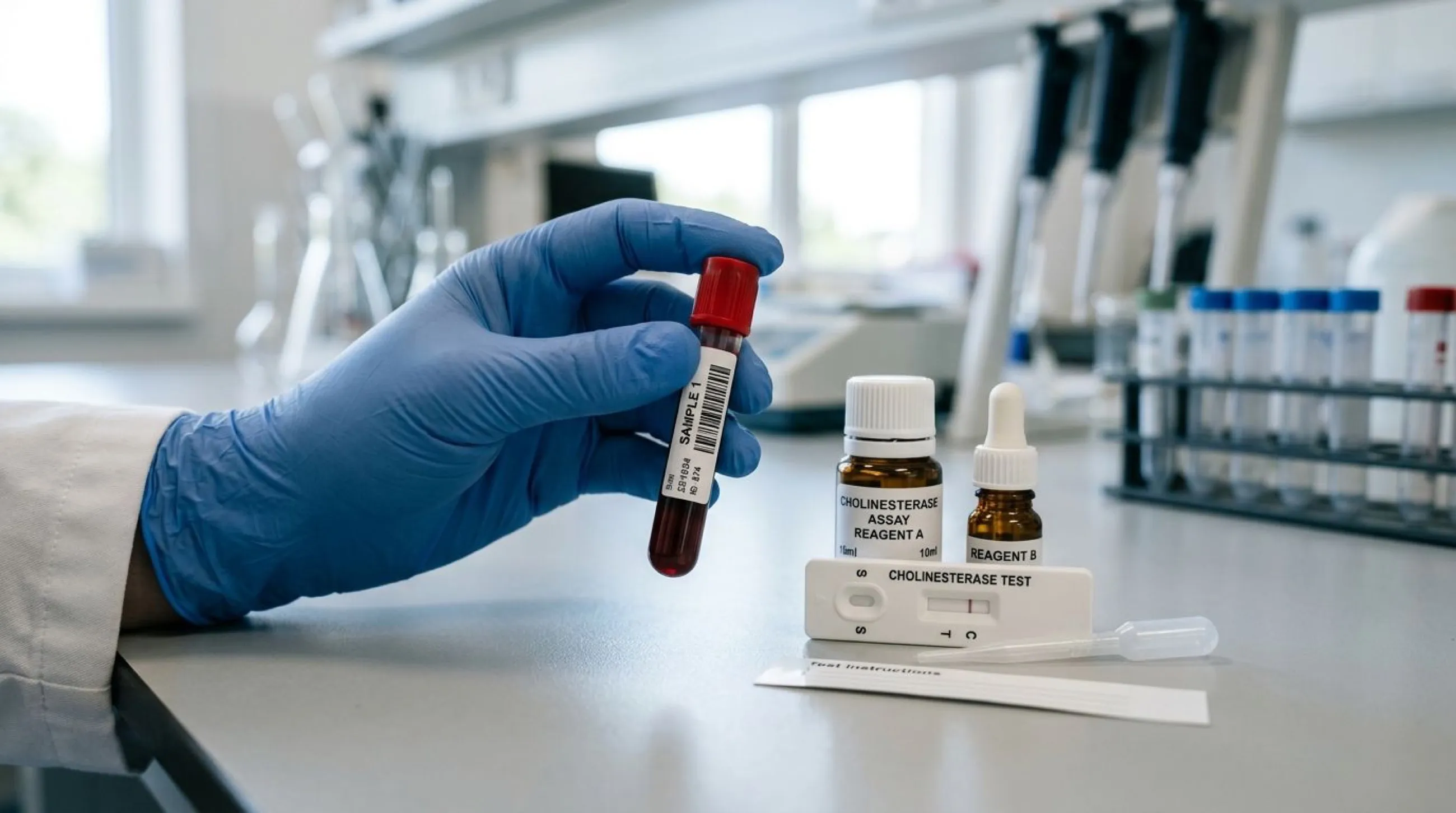
MedEd Pesticide links the symptoms of pesticide poisoning to the inhibition of acetylcholinesterase, the enzyme that breaks down acetylcholine. Poisoning from organophosphates is the most common, so that class is the first place to look.

MedEd Pesticide notes that organophosphate and carbamate pesticides harm the body by inhibiting acetylcholinesterase, which affects the nervous system.
MedEd Pesticide splits the effects of pesticides on human health into short-term and long-term groups. The answers below cover each one.
Short-term effects are neurological, gastrointestinal, skin and eye, and respiratory, and severe poisoning can follow.
Long-term effects include cancer, endocrine disruption, reproductive effects, neurological disorders and respiratory issues. Some pesticides cause cancer in humans, but whether pesticides cause cancer depends on the pesticide and the exposure.
People take in pesticides through ingestion, dermal absorption, inhalation or the eyes. The routes of pesticide exposure decide which symptoms appear first.
Agricultural workers, applicators and chemical manufacturing workers are most at risk. Prevention starts with adequate protective gear for the people who spread pesticides.

MedEd Pesticide reports that pesticides show a consistent statistical association with Parkinson's disease, but the cause is not proven. The full research on pesticides and Parkinson's separates what is established from what is not.
MedEd Pesticide cites UCLA studies that found living near paraquat-treated fields raised risk in California's Central Valley. That finding is also the base of the legal claims over paraquat.
The statistical association is consistent, but the cause is not proven.
Risk rises most when exposure lasts over 10 years.
Pesticides damage dopamine neurons by inhibiting mitochondrial complex I, which sets off oxidative stress and alpha-synuclein aggregation.

MedEd Pesticide describes glyphosate as a broad-spectrum herbicide. EPA first registered it in 1974 for use on many crops and in non-crop sites. Herbicides are a class of pesticide, so the answer to whether glyphosate is a pesticide is yes.
MedEd Pesticide also notes that lawn products such as glyphosate are harmful to dogs if swallowed or touched while wet.
IARC classifies glyphosate as probably carcinogenic to humans, and EPA does not.
US and EU reviews find it safe at label use, but exposure studies report neurotoxic effects.
Weeds can become resistant to glyphosate.
FIFRA now limits glyphosate lawsuits in state courts.

MedEd Pesticide explains that neonicotinoid insecticides act through neurotoxic effects, binding irreversibly to nicotinic acetylcholine receptors in insects. Growers apply them as seed coatings and sprays.
MedEd Pesticide also notes that they move through the environment in water, and residues turn up in finished drinking water. Bees are harmed by residues in the nectar and pollen of treated plants. A related class, carbamates, also poisons bees, fish and birds.

MedEd Pesticide defines pesticide residue as the trace amount of a pesticide that remains in or on food after application. A maximum residue level is the highest level legally tolerated in or on food or feed.
MedEd Pesticide’s guide to pesticide residue in food covers limits, monitoring and testing, and the answers below give the short version.
Under the Food Quality Protection Act of 1996, residue in regulated food is safe at the levels monitoring finds.
Scrubbing fresh produce under running water reduces residue.
Residue lasts as long as the half-life allows, which is 1 to 3 weeks for permethrin on plant surfaces.
Arsenic pesticides are insecticides, fungicides, herbicides and defoliants with an inorganic or organic arsenic active ingredient. These arsenic pesticides rest on...
Read article →It depends. Some pesticides cause cancer in humans, but the risk depends on the pesticide and the exposure. The Environmental Protection Agency says cancer risk...
Read article →Carbamate pesticides are insecticides derived from carbamic acid. Carbamate pesticides kill insects by reversibly inactivating the enzyme acetylcholinesterase, a...
Read article →The health effects of pesticides fall into five groups: nervous system, skin and eye, cancer, reproductive and endocrine effects. Pesticides produce different effects...
Read article →It is safe to re-enter 2 to 4 hours after general indoor spraying of pesticides, as pest control providers advise. The pesticide label sets the authoritative interval...
Read article →Pesticide waste is any material with any concentration of pesticide that counts as no longer desirable. Pesticide waste covers rinse material from containers and...
Read article →