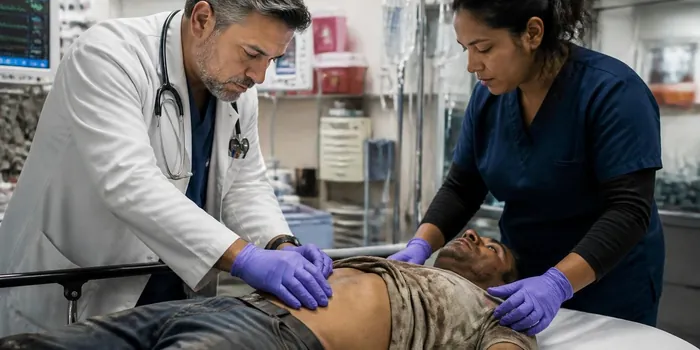
Symptoms of Pesticide Poisoning

Pesticide poisoning is an acute or subacute systemic, eye or skin illness from exposure to a pesticide. People are exposed through inhalation, skin contact or ingestion of contaminated water, soil or food. Symptoms follow the inhibition of acetylcholinesterase, the enzyme that breaks down acetylcholine. Organophosphates cause the most pesticide poisoning. Repeated low doses cause chronic poisoning, which can lead to long-term health problems. Diagnosis starts with the symptoms and the clinical history. Treatment starts with decontamination and a call to a physician without delay. Children, applicators, chemical manufacturing workers and people with low cholinesterase levels carry most of the risk. The outlook depends on how severe the poisoning is and how quickly treatment arrives.
What Is Pesticide Poisoning?
Pesticide poisoning is an acute or subacute systemic, eye or skin illness from exposure to a pesticide. Pesticide poisoning follows inhalation, ingestion, skin or eye exposure. Pesticides may enter the human body through contact with the skin and through the mouth, lungs and eyes. Acute poisoning is the severe poisoning that occurs after exposure to a single dose of pesticide. Chronic poisoning results from repeated, small, non-lethal doses over a long period. Clinical patterns point to the drug class. P Leveau described the cholinergic crisis as the pattern for organophosphate or carbamate insecticides in a 2016 study. Carbaryl is a contact and stomach insecticide that causes such poisoning.
How Do People Get Exposed to Pesticides?
People get exposed to pesticides through inhalation, skin contact or ingestion of contaminated water, soil or food. Pesticide exposure is often unrecognized. The dose and route of exposure set how fast symptoms begin. Inhalation acts most rapidly, then ingestion, then topical contact. Stronger insecticides contain many dangerous substances. A farm or commercial greenhouse might use them, and someone might store them in a garage. Applying chemicals in enclosed areas, such as grain bins, barns and livestock facilities, gives higher exposure than applying them outdoors. At least 50 percent of accidental pesticide deaths in the United States involve children under 10. Landscapers, airline crews, veterinarians, lawn and pest providers, and greenhouse and farm workers face increased occupational exposure. Dorothy Nguyen wrote in a 2024 study that acute pesticide poisoning continues to affect farm workers. Aldicarb is one carbamate insecticide behind such exposures.
What Are the Symptoms of Pesticide Poisoning?
The symptoms of pesticide poisoning follow the inhibition of acetylcholinesterase. They affect the heart, lungs, nervous system, eyes, stomach and skin. Pesticide poisoning produces symptom groups that clinicians separate by receptor type and severity. Key symptoms include:
- Muscarinic symptoms: These are salivation, lacrimation, urination, defecation, vomiting, pinpoint pupils, bronchorrhea, wheezing and bradycardia. They form the classic SLUDGE pattern, which covers only part of the picture.
- Nicotinic symptoms: These are weakness, fasciculations, sweating, tachycardia and abdominal pain. They arise because acetylcholine builds up in the synapses.
- Central nervous system symptoms: These are headache, dizziness, seizures, unconsciousness and coma. They mark deeper involvement of the nervous system.
- Mild acute symptoms: These are fatigue, headache, dizziness, blurred vision, excessive sweating, nausea and stomach cramps. They resemble other illnesses, so the pesticide history matters.
- Severe acute symptoms: These are unconsciousness, a constricted pupil, muscle twitches and breathing difficulty. They end in death if left untreated, and intermediate syndrome can follow.
The typical toxidrome in organophosphate poisoning comprises the SLUDGE symptoms, wrote John Victor Peter in a 2014 study. Paraoxon, one of the most potent acetylcholinesterase-inhibiting insecticides, shows why this toxidrome matters.
What Symptoms Follow Eye, Skin or Inhalation Exposure?
Eye, skin and inhalation exposure to pesticides cause symptoms that depend on the route of contact. Dermatitis is the most commonly reported effect of pesticide exposure. Primary irritant dermatitis ranges from slight redness of the skin to blisters or ulcerated lesions. Eye symptoms of organophosphate poisoning include tearing, bloodshot eyes and small or constricted pupils. Inhaling certain organophosphates causes symptoms faster and more severely than the same amount on your skin. Permethrin, a pyrethroid, can be inhaled, ingested or absorbed through skin. Cornell University in 2021 defined chronic poisoning as poisoning from repeated, small, non-lethal doses over a long period.
How Soon After Exposure Do Symptoms Start?
Symptoms start soon after exposure, within 12 hours for organophosphates and carbamates. Organophosphate poisoning may cause illness quickly or after a delay of a few hours. Symptoms that start after 12 hours point to another illness. John Victor Peter of the Christian Medical College and Hospital categorized onset as acute within 24 hours. He called onset delayed from 24 hours to 2 weeks, and late beyond 2 weeks. Weakness of proximal, cranial and respiratory muscles develops 1 to 3 days after exposure to organophosphates. Intermediate syndrome names this weakness. Carbamates clear spontaneously within approximately 48 hours after exposure. People differ widely in blood cholinesterase levels, so recovery time differs. Blood cholinesterase regenerates in about 120 days from very low to normal levels after organophosphate poisoning.
Why Are Some Pesticides Toxic to the Body?
Some pesticides are toxic to the body because they inhibit cholinesterase, the enzyme that breaks down acetylcholine. Organophosphates and carbamates block plasma and red blood cell cholinesterase. Acetylcholine then accumulates in synapses. Sheemona Chowdhary wrote in a 2014 study that inhibition of acetylcholinesterase is the main mechanism of toxicity of such pesticides. Organophosphates can bind irreversibly to cholinesterase, whereas carbamate effects clear on their own. Organochlorines such as DDT and dieldrin act as sodium channel agonists, and so do the pyrethroids. Endosulfan, an organochlorine insecticide, blocks the GABA-gated chloride channel of the insect. Approximately one percent of the population has abnormally low levels of cholinesterase. The health risk depends on the toxicity of the pesticide and the amount of exposure.
Which Chemicals Cause the Most Pesticide Poisoning?
Organophosphates cause the most pesticide poisoning, and the chemical groups below lead the list. Organophosphate pesticides cause more occupational poisoning and death than any other single group of pesticides. A farm or commercial greenhouse might use stronger products, and someone might store them in their garage. Key chemical groups include:
- Organophosphates: These include chlorpyrifos, diazinon, fenthion, malathion and parathion. Organophosphate toxicity can be fatal.
- Carbamates: These include aldicarb and methomyl. Carbofuran has one of the highest acute toxicities to humans of any insecticide widely used on field crops.
- Pyrethrins and pyrethroids: These are plant-derived or synthetic insecticides in household bug sprays. They can cause life-threatening breathing problems if breathed in, and permethrin does not cause cholinesterase inhibition.
- Anticoagulant rodenticides: These include warfarin and similar products.
L J Fuortes reported in a 1993 study on organophosphate toxicity. It causes almost 40 percent of pesticide illnesses reported to poison control centers.
Can Pesticide Exposure Cause Long-Term Health Problems?
Yes. Pesticide exposure can cause long-term health problems, and chronic pesticide poisoning follows repeated low doses. Mohamed B Abou-Donia wrote in a 2003 study about long-term, persistent, chronic neurotoxicity symptoms. Many studies report them after acute exposure to high doses. Long-term sequelae of organophosphate poisoning may include cognitive deficits or parkinsonism. In a 2005 study, Eli Shahar described parkinsonian perturbations that developed 5 days after a child ate an eggplant. The eggplant was sprayed with dimethoate. Repeated low-dose poisoning causes nervousness, slowed reflexes, irritability or a general decline in health. Symptoms of chronic poisoning may not become evident for weeks, months or even years. Workers who make chemicals, and applicators exposed to high levels over many years, run the greatest risk of chronic effects. In a 2015 cohort study, Hung-Sheng Huang selected 818 patients and 16,360 healthy comparisons. The nationwide study was retrospective and population-based and ran from 1999 to 2010. Paraoxon has served scientists to study acute and chronic effects of organophosphate intoxication.
How Is Pesticide Poisoning Diagnosed?
To diagnose pesticide poisoning, start with the symptoms and the clinical history. Pesticide poisoning is diagnosed mainly on clinical grounds, because only organophosphates have a practical laboratory test. Measure red blood cell acetylcholinesterase levels to assess organophosphate poisoning. A healthcare provider diagnoses organophosphate poisoning from symptoms and clinical history, sometimes with blood tests of acetylcholinesterase activity levels. T C Marrs wrote in a 1993 study that diagnosis rests on clinical signs plus inhibition of erythrocyte acetylcholinesterase. Rule out heat exhaustion, food poisoning and asthma, which are sometimes confused with pesticide poisoning. Expect wide differences in blood cholinesterase levels between people. With the exception of the organophosphates, diagnosis is primarily clinical, due to lack of diagnostic tests. No laboratory test confirms the presence of permethrin in an individual.
How Is Pesticide Poisoning Treated?
To treat pesticide poisoning, start with decontamination and call a physician without delay. For skin contamination, remove contaminated clothing, wash the skin with water, and wash hair and fingernails. Pesticide poisoning is treated further with atropine for respiratory symptoms and pralidoxime for neuromuscular symptoms. Use medical antidotes only under a qualified physician, because they can be dangerous if misused. Supportive therapy is key. Monitor patients closely for respiratory failure due to weakness of respiratory muscles. Nick A Buckley found in a 2011 study that three trials including 366 patients compared pralidoxime with placebo. Adam Blumenberg reported in a 2018 study that five studies with 586 patients did not show that 2-PAM improves outcomes. Expect recovery to take several days to weeks, depending on the extent of the poisoning. Pralidoxime is the most often used oxime worldwide, yet its clinical benefit is still unclear.
Should You Call Poison Control or Emergency Services?
Yes. You should call poison control or emergency services at once after any pesticide exposure. Poison control is reached through the national toll-free Poison Help hotline at 1-800-222-1222, from anywhere in the United States. The hotline answers 24 hours a day, 7 days a week. The call does not need to be an emergency. The National Library of Medicine (NIH) in 2025 stated that the hotline connects you to experts in poisoning. There should be no delay in calling a physician or taking an exposed person to a hospital. Do not make the person throw up unless poison control or a health care provider says so.
Who Is Most at Risk of Pesticide Poisoning?
Most pesticide poisoning risk falls on children, applicators and chemical manufacturing workers, and people with abnormally low cholinesterase levels. Landscapers, farm workers and residents of urban and low-income communities face risk. Children face the highest risk of accidental ingestion. About 1 percent of the population has abnormally low cholinesterase levels, which puts them at extreme risk with certain pesticides. Applicators who ignore label directions and skip protective equipment raise their risk of chronic effects. Many pesticides are heavily used in urban and low-income communities. A 2020 study found 2,079 cases of organophosphate exposure without any reported deaths. Dorothy Nguyen of the University of California studied inadequate personal protective equipment as a factor in acute pesticide poisoning. Her meta-analysis in 2024 shows that poisoning continues to affect farm workers, especially in low- and middle-income countries. The Agricultural Health Study follows licensed pesticide applicators and their spouses from Iowa and North Carolina.
How Can Pesticide Poisoning Be Prevented?
To prevent pesticide poisoning, start with safe storage and protective equipment. Pesticide poisoning is prevented when you store pesticides in their original labeled container. Keep them in a locked storage area. Using gloves, mask and boots during application may protect users from the health effects of some pesticides but not all. Cleveland Clinic in 2024 advised personal protective equipment, like gloves and a mask, to reduce your risk. Avoid using pesticides in unventilated spaces and keep pets and children away after application. Never eat, drink or smoke until after leaving the work area and washing thoroughly. Expect pesticide residues to linger for several months after application. Dorothy Nguyen from the Department of Environmental Health Sciences wrote a meta-analysis. Inadequate personal protective equipment use was associated with increased odds of having APP. The Worker Protection Standard reduces the risk of pesticide poisoning among agricultural workers and pesticide handlers.
What Is the Outlook After Pesticide Poisoning?
The outlook after pesticide poisoning depends on how severe the poisoning is and how quickly treatment is received. Intermediate syndrome occurs when a person has a prolonged and severe inhibition of acetylcholinesterase. Recovery is harder after organophosphate poisoning than after carbamate poisoning. Continued improvement in the first 4 to 6 hours after treatment is a good sign that recovery will occur. With supportive care, patients may recover normal neurologic function within two to three weeks. Hung-Sheng Huang titled a 2015 study Acute Anticholinesterase Pesticide Poisoning Caused a Long-Term Mortality Increase. In it, 11.5 percent of 818 patients died during follow-up. The risk of death was particularly high in the first month after ACPP began. Chronic poisoning can stay hidden for weeks, months or even years.
What Is the Death Rate From Organophosphate Poisoning?
The death rate from organophosphate poisoning is 2% to 25% worldwide. Prompt treatment reduces your risk of a life-threatening outcome. Michael Eddleston wrote in a 2008 study that medical management is difficult, with case fatality generally more than 15%. He estimated that organophosphorus pesticide self-poisoning kills 200,000 people every year. D Roberts reported in a 2005 study that the case-fatality ratio for intentional self-poisoning is around 10-20%. That ratio holds even with standard antidotes. 50 years after first use, we still do not know how the core treatments should best be given. No data show any clear effect of diazepam alone on lethality in organophosphate poisoning.