Pesticides and Parkinson's Disease: What the Research Shows

Pesticides show a consistent statistical association with Parkinson’s disease, but the cause is not proven. The weight of evidence still shows an established link. UCLA studies found that living near paraquat-treated fields raised risk in California’s Central Valley. Rotenone, an insecticide, and paraquat, a herbicide, are among the pesticides linked to the disease. Applicators, farmers, farmworkers, their spouses and people near treated fields are at risk. Risk rises most when exposure lasts over 10 years. Pesticides damage dopamine neurons by inhibiting mitochondrial complex I, which sets off oxidative stress and alpha-synuclein aggregation. Genes change the risk, and wearing the required protective equipment reduces exposure.
Do Pesticides Cause Parkinson’s Disease?
It depends. Pesticides show a consistent statistical association with Parkinson’s disease, but cause as a proven effect is not established. The EPA has not found a clear link between paraquat exposure from labeled uses and Parkinson’s disease.
A 2025 study by E Ray Dorsey implicates certain pesticides, trichloroethylene, perchloroethylene and air pollution in Parkinson’s disease. These toxicants impair mitochondrial or lysosomal function, or both.
Alberto Ascherio wrote in a 2016 study that pesticide exposure raises risk. Dairy consumption, a history of melanoma and traumatic brain injury go with increased risk too. Smoking, caffeine, higher serum urate, physical activity and ibuprofen go with reduced risk.
Latency between pesticide exposure and diagnosis runs 2 to 3 decades (20 to 30 years) for several agents. That finding comes from a Central Valley case-control study of 829 cases and 824 controls. A 2026 study by Yufan Gong links longer exposure to 56 pesticides with increased risk. A study by Kajsa Atterling Brolin of Lund University notes that a decades-long lag complicates causal inference. The World Health Organization recommends reducing exposure to pesticides, trichloroethylene and air pollution.
Is the Link Between Pesticides and Parkinson’s Disease Proven?
No. The weight of evidence shows an established link between pesticides and Parkinson’s disease, but not a proven cause. It shows a generic association with pesticide exposure. It does not show a causal relationship for any single pesticide compound.
31 of 38 case-control studies published since 1983 had 150 or fewer cases. Only 3 of 38 had more than 375 cases.
Exposure histories were collected retrospectively, mostly by questionnaire, so information bias and recall bias limit most studies. Toxicology studies used acute dosing and routes unlike those of pesticide users. None used exposure levels comparable to users, so their relevance to people is hard to interpret. No study has determined whether rural living, well-water use and farming are independent risk factors or only reflect pesticide exposure.
Gianni Pezzoli reported in Neurology in 2013 that study quality is a source of heterogeneity in case-control results. Higher quality is frequently associated with lower heterogeneity. The 2013 study in Neurology adds that prospective and high-quality case-control studies are required to substantiate a cause-effect relationship.
A 2025 study from the University of Rochester Medical Center lists what remains uncertain. Doses, timing and routes of exposure, genetic-environmental interactions, combined exposures and the role of the microbiome are still unclear. Kajsa Atterling Brolin, from Lund University, explains that causality is hard to determine in isolation. With complementary evidence such as animal models, the associations increasingly likely reflect harmful causal effects.
What Did the UCLA Pesticide Studies Find?
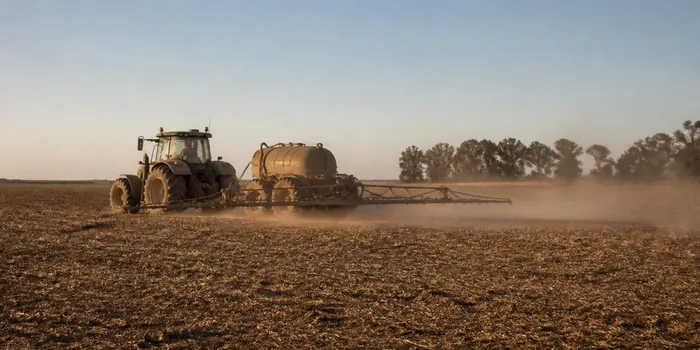
The UCLA pesticide studies find that living near paraquat-treated fields raised Parkinson’s disease risk in California’s Central Valley. The UCLA research asked whether living near treated fields, and not only working with pesticides, raises that risk.
A 2024 study by Kimberly C Paul measured residential and workplace proximity to commercial agricultural applications. The setting was three California counties since 1974. The measures came from pesticide use reporting data and land use maps. The study compared 829 Parkinson’s patients with 824 community controls.
Working near paraquat applications every year in the window raised the odds of Parkinson’s disease about 2-fold. Each 10 pounds (4.54 kilograms) of average intensity did the same. The strongest odds appeared in those diagnosed at 60 years or younger, and estimates were comparable for men and women.
A study from the University of California by Yufan Gong found stronger associations for older exposures. These were exposures 11 to 20 years and 21 to 30 years before diagnosis. Together, these findings show that living near paraquat applications raised risk, not only working with them.
Which Pesticides Are Linked to Parkinson’s Disease?
The pesticides linked to Parkinson’s disease include rotenone, an insecticide, and paraquat, a herbicide. Maneb, a fungicide, belongs to the list too, but the evidence for fungicides alone is equivocal. In vitro, glyphosate, methomyl, carbaryl and alachlor do not speed alpha-synuclein fibril formation. Diazinon and 2,4,5-TP were associated with reduced risk in the same cohort. A 2013 study by Gianni Pezzoli reviewed 104 studies of pesticides and the disease. Key types include:
- Paraquat: Paraquat is a nonselective contact herbicide with high pulmonary toxicity. In that analysis, paraquat or maneb/mancozeb exposure was associated with about a 2-fold increase in risk in high-quality case-control studies. Two case-control studies found a significant association mainly after more than 20 years, while others found a raised but nonsignificant risk.
- Rotenone: Rotenone is a naturally occurring insecticide and a high-affinity inhibitor of mitochondrial complex I that crosses biologic membranes easily. Continuous rotenone infusion in rats cut complex I binding by 75 percent. The evidence comes from rats and cells, so its relevance to people is hard to interpret.
- Maneb and mancozeb: Maneb is a manganese-containing dithiocarbamate pesticide whose areas of use in the United States overlap markedly with those of paraquat. Mancozeb is a contact fungicide that inhibits enzyme activity. Fungicide evidence alone is equivocal, so the trade-off is weaker proof outside combined exposure with paraquat.
- Organochlorines such as dieldrin, lindane and DDT: Organochlorines are a class of insecticides. Three autopsy case-control studies found higher dieldrin and lindane levels in the brains of deceased Parkinson’s patients than in other diseased brains. Heterogeneity stayed high for organochlorines in case-control studies.
- Organophosphates such as terbufos and dichlorvos: Organophosphates are insecticides. Risk was elevated for applicators in the highest category of intensity-weighted lifetime days for dichlorvos. Heterogeneity stayed high for organophosphates, so the evidence is weaker.
- Pyrethroids such as permethrin: Pyrethroids are insecticides. Risk was elevated for applicators in the highest category of lifetime days for permethrin used on animals. Permethrin was associated with the disease among non-users of protective gloves but not among glove users.
- Trifluralin and 2,4,5-T: Trifluralin is a common preemergent selective herbicide, a dinitroaniline. In vitro, trifluralin speeds alpha-synuclein fibril formation. Evidence for 2,4,5-T is limited, which is the trade-off.
- Endothall: Endothall is a herbicide named among the pesticides linked to the disease. Its evidence is thin compared with paraquat.
Does Paraquat Cause Parkinson’s Disease?
It depends. Paraquat shows a significant statistical association with Parkinson’s disease, but cause as a proven effect is not established. Paraquat is among the herbicides with the strongest reported links to the disease.
13 case-control studies with 3,231 patients and 4,901 controls entered a 2019 study by Wimonchat Tangamornsuksan. The pooled result shows a significant association. Two case-control studies found paraquat exposure significantly associated with the disease, particularly after more than 20 years. Other studies found a raised but nonsignificant risk.
Rat studies disagree on whether paraquat reaches the brain. Some find little passage across an intact blood-brain barrier. Others find it enters through the neutral amino acid transporter.
Kimberly C Paul reported susceptibility findings in the International journal of epidemiology. The strongest odds were observed in people diagnosed at 60 years of age or younger. Those patients had much higher risk after exposure to maneb, paraquat or both between 1974 and 1989. The EPA has not found a clear link between paraquat and adverse outcomes. Those outcomes include Parkinson’s disease and cancer, and the finding covers labeled uses.
Is Paraquat Banned?
No. Paraquat is banned, phased out or withdrawn in more than 70 countries, including the European Union and China. In the United States, paraquat stays legal to sell and use while the EPA reviews it again.
The EPA released the paraquat interim decision for registration review in July 2021. The decision requires mitigation measures. Aerial applications are limited to 350 acres (141.6 hectares) per applicator per 24 hours. A 48-hour restricted-entry interval applies for all crops and uses except cotton desiccation.
A new vapor pressure study was submitted in January 2024, and the EPA review was completed in March 2024. An EPA memorandum incorporated it in November 2025. The EPA reopened its safety review of paraquat in 2025, asking manufacturers for new data and publishing new drift calculations. The new study showed greater uncertainty about whether paraquat volatilizes than previously considered. Kimberly C Paul of the Department of Neurology examined paraquat dichloride use and Parkinson’s disease in California’s Central Valley.
Who Is at Risk of Pesticide-Related Parkinson’s Disease?
At risk are pesticide applicators and farmers, farmworkers, spouses of applicators and people who live near treated agricultural fields. The Agricultural Health Study followed applicators and their spouses for over 20 years. Farmworkers and nearby residents are exposed to pesticides most often. People near golf courses show a reported association with pesticide-related Parkinson’s disease risk.
373 applicators and 118 spouses had incident doctor-diagnosed Parkinson’s disease. They came from 38,274 applicators and 27,836 spouses followed over 20 years. Srishti Shrestha reported these results in Environmental research in 2020.
A 2025 study by Brittany Krzyzanowski found 126 percent increased odds of Parkinson’s disease near golf courses. This means living within 1 mile of one. The comparison group lived more than 6 miles away. The golf-course study examined drinking water contamination as a potential route, using groundwater vulnerability and municipal well locations.
One case-control study tied occupational herbicide use between ages 26 and 55 to a significant rise in risk. Some occupational categories show a higher incidence of the disease, but the results are inconsistent.
Does Home Exposure Raise the Risk as Much as Work Exposure?
It depends. Home exposure raises risk much like work exposure for paraquat in California’s Central Valley. Residential paraquat proximity gave estimates close to the workplace estimates for duration and for average intensity. Evidence on non-occupational exposure to other pesticides is thinner. Pesticide exposure outside work, including residential and household exposure, is associated with a higher risk of Parkinson’s disease.
Long-term residential chlorpyrifos exposure carried more than 2.5 times the risk of developing the disease compared with no such exposure. Residential exposure comes from agricultural applications near homes and from household pesticide use.
People in water service areas with a golf course had 49 percent greater odds than people on private wells. Vulnerable groundwater regions with a golf course showed 82 percent greater odds than nonvulnerable regions. Brittany Krzyzanowski reported both results in a study titled Proximity to Golf Courses and Risk of Parkinson Disease.
A 2025 JAMA network open study adjusted for age, sex, race and ethnicity, year of index and median household income. It adjusted for urban or rural category as well. That adjustment makes the residential evidence more reliable.
How Much Do Pesticides Raise the Risk of Parkinson’s Disease?
Pesticides raise Parkinson’s disease risk most when exposure lasts over 10 years, and over 20 years in some studies. The Agricultural Health Study assessed lifetime pesticide use among private applicators and their spouses in Iowa and North Carolina. Associations in case-control studies were often significant only at those durations.
4 of 6 duration studies found a significant rise with longer exposure. High pesticide doses carried more risk than low doses. Regular use carried less risk than occasional use in one study.
A 2017 study by Hussien Ahmed from Zagazig University shows significant heterogeneity in the pooled estimate among case-control studies. Estimates differ between studies because of study quality. Case-control findings are expressed as odds, pooled under a random-effects model, each with a 95 percent range.
What Is Parkinson’s Disease?
Parkinson’s disease is an idiopathic disease of the nervous system marked by progressive tremor, bradykinesia, rigidity and postural instability. Its main pathologic feature is a profound loss of pigmented neurons in the substantia nigra pars compacta. Lewy bodies appear in the surviving neurons. The first clinical signs appear only after 70 to 80 percent of dopaminergic neurons are lost. Diagnosis is clinical, with no definitive blood test or brain scan, and autopsy histopathology is the only definite confirmation.
Lorraine V Kalia, from Toronto Western Hospital, describes classical motor features of parkinsonism plus clinically significant non-motor features. The cause remains unknown. The disease seems to result from a complicated interplay of genetic and environmental factors affecting fundamental cellular processes. No treatments slow the neurodegenerative process.
How Common Is Parkinson’s Disease?
Parkinson’s disease is common: 6.1 million people had it worldwide in 2016, compared with 2.5 million in 1990. The World Health Organization has launched a global strategy for Parkinson’s. More than 10 million people now live with the disease. A 2018 study by the GBD 2016 Parkinson’s Disease Collaborators found age-standardised prevalence rose 21.7 percent from 1990 to 2016. That rise goes beyond the effect of ageing.
25.2 million people are projected to have the disease in 2050, according to a 2025 study by Dongning Su. That is a 112 percent increase from 2021. The male-to-female ratio is projected to rise from 1.46 in 2021 to 1.64 in 2050. East Asia is projected to have the most cases in 2050. Western sub-Saharan Africa is projected to have the fastest rise.
In Europe, 1.8 percent of people aged 65 or older have the disease. About 16 to 19 new cases occur per 100,000 people per year. Age is the largest risk factor, and men are affected more often than women. Burden is measured in prevalence, years lived with disability, disability-adjusted life-years and deaths.
How Do Pesticides Damage Dopamine Neurons?
Pesticides damage dopamine neurons by inhibiting mitochondrial complex I, which sets off oxidative stress and alpha-synuclein aggregation. Rotenone binds complex I with high affinity, and complex I inhibition leads to oxidative damage in neurons.
Continuous rotenone infusion in rats cut complex I binding by 75 percent at 20 to 30 nmol/L in the brain. It produced nigrostriatal lesions with alpha-synuclein inclusions resembling Lewy body precursors. Rats given paraquat intravenously showed lower complex I activity, more lipid peroxides and less striatal dopamine.
Todd B Sherer wrote in a 2002 study that 5 nm rotenone was enough to trigger the changes below. Human neuroblastoma cells treated for 1 to 4 weeks showed them. The cells accumulated and aggregated alpha-synuclein and ubiquitin. Oxidative damage appeared after a latency of more than 2 weeks. Caspase-dependent death followed in about 5 percent of cells at 4 weeks.
Brain microglia release reactive oxygen species and inflammatory factors that take part in rotenone neurotoxicity. Developmental exposure to maneb and paraquat leaves a silent injury that adult re-exposure unmasks. The mechanistic evidence comes from rats, mice and cell models.
Do Genes Change the Risk From Pesticides?
Yes. Genes change the risk from pesticides, and the SNCA gene makes the protein alpha-synuclein. Dopamine transporter susceptibility alleles raised risk after high paraquat and maneb exposure. Evidence for other gene and pesticide pairs is preliminary or mixed.
Beate R Ritz reported in a 2009 study from the University of California at Los Angeles a 3-fold risk increase. It followed high paraquat and maneb exposure in carriers of one DAT susceptibility allele. Carriers of two or more alleles faced more than 4-fold risk. The data suggest a gene dosing effect, since risk rose with the number of susceptibility alleles.
Twin studies show low concordance of 5 to 8 percent in identical and fraternal twins, so factors beyond genes contribute. Mice with doubly mutated alpha-synuclein showed more dopaminergic neurotoxicity from maneb and paraquat than mice with normal human alpha-synuclein. Meta-analyses have not shown clear links between xenobiotic-metabolizing enzyme polymorphisms and the disease.
A 2026 study by Zeynep Hilal Üstündağ found occupational pesticide exposure in 36 percent of GBA1 carriers versus 22 percent. It did not change age of onset or severity once the disease was manifest.
How Can Pesticide Exposure Be Reduced?
To reduce pesticide exposure, start with the required personal protective equipment, including chemical-resistant gloves. Follow label directions and the restricted-entry interval before re-entering treated areas, so exposure stays reduced. Respect the 48-hour interval for paraquat on all crops and uses except cotton desiccation. Use consistent hygiene practices and decontamination supplies after handling. Receive annual pesticide safety training. Pay attention to notifications and warning signs for treated areas. Note that a 2015 study by Melissa Furlong tied paraquat and permethrin to Parkinson’s disease among non-users of gloves. Glove users showed no such tie. Expect employers under the Worker Protection Standard to provide PPE in good condition, training, decontamination supplies and notice of applications. Know that this standard protects handlers and workers on farms, forests, nurseries and greenhouses.