Carbamate Pesticides: Examples, Toxicity and Uses

Carbamate pesticides are insecticides derived from carbamic acid. They work by reversibly inhibiting acetylcholinesterase, so acetylcholine builds up at synapses. Growers use them on fruit and vegetable crops, lawns and gardens, livestock and poultry, and soil pests. Toxicity varies widely, from aldicarb at a rat oral LD50 of 1 mg/kg to carbaryl at 500 to 850 mg/kg. Poisoning causes a cholinergic crisis, which doctors diagnose from the muscarinic toxidrome. Treatment starts with securing the airway and giving oxygen before atropine. Carbamates are generally not considered to cause cancer, except carbaryl and carbofuran. Carbofuran is banned from food use, and carbamates also poison bees, fish and birds.
What Are Carbamate Pesticides?
Carbamate pesticides are insecticides derived from carbamic acid. Carbamate pesticides kill insects by reversibly inactivating the enzyme acetylcholinesterase, a cholinesterase-inhibiting mode of action. Carbaryl is 1-naphthyl methylcarbamate, a man-made organic compound that overstimulates insect nervous systems.
Insecticidal properties of carbamate and organophosphorus compounds came to light in the 1930s, and pesticide development followed in the 1940s. A US Geological Survey publication from 1999 gives this history.
The first carbamate, carbaryl, was introduced in 1956. Carbaryl has since seen wide use in lawn and garden settings.
What Are Examples of Carbamate Pesticides?
Examples of carbamate pesticides are carbaryl (Sevin), carbofuran (Furadan), aldicarb (Temik), methomyl (Lannate), oxamyl (Vydate), thiodicarb (Larvin) and propoxur (Baygon). Carbofuran, methomyl, oxamyl and thiodicarb are highly poisonous, while carbaryl is only moderately poisonous.
The 2001 New Jersey DEP Pesticide Control Program fact sheet gives this toxicity ranking. Propoxur is sold as Baygon and appears in flea and tick products.
Aldicarb is a carbamate insecticide and the active substance in Temik. Aldicarb and methomyl are the carbamates most often implicated in human poisoning. FMC Corporation registered carbofuran under the product name Furadan. Carbofuran is an N-methyl carbamate insecticide and nematicide for soil and leaf pests in field, fruit and vegetable crops.
Highly toxic N-methyl carbamates have a rat oral LD50 of 50 mg/kg or less. Rat oral LD50 values rank the examples. Aldicarb stands at 1 mg/kg, carbofuran at 8 mg/kg, oxamyl at 5.4 mg/kg and methomyl at 30 to 34 mg/kg. Carbaryl reaches 500 to 850 mg/kg, which makes it far less lethal per dose. EPA assessed ten N-methyl carbamates together in 2007, among them aldicarb, carbaryl, carbofuran, propoxur and thiodicarb.
How Do Carbamates Differ From Organophosphates?
Carbamates differ from organophosphates in enzyme binding, duration of poisoning, nervous system effects and delayed neuropathy. Carbamates form a carbamyl complex with the enzyme that dissociates more readily than the phosphoryl complex of organophosphates. Organophosphates can irreversibly bind to cholinesterase.
| Attribute | Carbamates | Organophosphates |
|---|---|---|
| Enzyme binding | Reversible; the enzyme does not age | Can be irreversible; the enzyme ages |
| Duration of poisoning | Cleared within approximately 48 hours | Longer than carbamate poisoning |
| Central nervous system effects | Often less pronounced | Central nervous system toxicity is common |
| Delayed neuropathy | Intermediate syndrome only rarely | Intermediate syndrome and axonal neuropathy |
Carbamates are cleared spontaneously within approximately 48 hours after exposure. Carbamate poisonings tend to be shorter than organophosphate poisonings because of reversible binding and more rapid metabolism.
CNS effects from carbamates are often less pronounced, because carbamates cross the blood-brain barrier with more difficulty.
Allister Vale’s 2015 study in the Handbook of clinical neurology found organophosphates age the enzyme and carbamates do not. Organophosphates include parathion, an organophosphate insecticide and acaricide. The same study places the intermediate syndrome some 24 to 96 hours after organophosphate exposure. The intermediate syndrome is a delayed onset of muscular weakness and paralysis following acute cholinesterase inhibitor poisoning.
Axonal neuropathy begins 1 to 3 weeks after exposure to a few organophosphates such as chlorpyrifos. Chlorpyrifos is an organophosphate insecticide, acaricide and miticide used primarily to control foliage and soil-borne insect pests.
Respiratory depression with pulmonary edema is the usual cause of death from N-methyl carbamate poisoning. Blood cholinesterase levels may mislead in carbamate poisoning because the carbamylated enzyme reactivates in vitro.
How Do Carbamate Pesticides Work?
Carbamate pesticides work by reversibly inhibiting acetylcholinesterase, so acetylcholine accumulates at synapses. The N-methyl carbamate esters cause reversible carbamylation of this enzyme.
In humans, acetylcholinesterase is a cholinergic enzyme that hydrolyzes the neurotransmitter acetylcholine into choline and acetate. Carbamates inhibit acetylcholinesterase and lead to accumulation of acetylcholine. Acetylcholine is a neurochemical with a wide variety of functions in the brain and other organ systems.
Acetylcholine builds up at parasympathetic neuroeffector junctions, at skeletal muscle junctions and autonomic ganglia, and in the brain. At skeletal muscle junctions the excess acetylcholine may cause twitching. It may weaken or paralyze the cell by depolarizing the end-plate.
A 2013 study by John E Casida of the University of California covered insects and mammals. It found that acetylcholinesterase inhibition and acetylcholine accumulation lead to excitation and death.
Carbamates need no hepatic activation for toxicity, so the parent compound is the active moiety. Carbamates induce excessive stimulation of the parasympathetic nervous system by inhibiting acetylcholinesterase and pseudocholinesterase. Butyrylcholinesterase, known as pseudocholinesterase, is a nonspecific cholinesterase that hydrolyses many choline-based esters.
What Are Carbamate Pesticides Used For?
Carbamate pesticides are used on fruit and vegetable crops, lawns and gardens, livestock and poultry, and soil pests. Carbaryl, a carbamate, controls over 100 species of insects on citrus, fruit, cotton, forests, lawns and nuts. Carbamates treat ornamentals, shade trees, forests and field corn.
A 1996 EXTOXNET carbaryl profile adds that carbaryl treats poultry, livestock and pets. Carbaryl is a General Use Pesticide.
Carbamates are typically applied to apples, blueberries, peaches, sweet corn, potatoes, tomatoes and brassica vegetables. Methomyl is a carbamate insecticide introduced in 1966. Some carbamates are translocated within plants, which makes them an effective systemic treatment.
Carbofuran controls soil and leaf pests as an insecticide and nematicide. Federal registration of carbofuran now covers only four food crop uses and two non-food crop uses.
National Pesticide Information Center carbaryl guidance from 2016 says carbaryl products are not registered for homes or pets.
How Toxic Are Carbamate Pesticides?
Carbamate pesticides range from a rat oral LD50 of 1 mg/kg for aldicarb to 500 to 850 mg/kg for carbaryl. Carbamate pesticides count as highly toxic at a rat oral LD50 of 50 mg/kg or less. They count as moderately toxic above 50 and below 500 mg/kg.
Carbofuran has a rat oral LD50 of 8 mg/kg, which places it in the highly toxic group. Carbaryl is moderately poisonous, whereas carbofuran, methomyl, oxamyl and thiodicarb are highly poisonous. Oxamyl is a pesticide that comes in granulated and liquid forms.
Carbamates give a greater gap between symptom-producing and lethal doses than most organophosphates do, because the enzyme complex is labile. The LD50 is only one measure of pesticide toxicity. A compound with a high LD50 can still produce life-threatening symptoms in a large dose. Route and compound both shape these values.
R C Gupta’s 1994 study found carbofuran most often involved in malicious poisoning. That study named atropine with memantine the most effective antidote against acute carbofuran toxicity.
How Do Carbamates Enter the Body?
Carbamates enter the body through the gastrointestinal tract, the lungs and the skin. Carbamates carry the highest dose by ingestion. Carbofuran has a rat oral LD50 of 5 mg/kg against a rat dermal LD50 of 120 mg/kg. That makes ingestion about 24 times more toxic than skin contact.
The 2013 US EPA Recognition and Management of Pesticide Poisonings chapter 6 gives these two values.
Carbofuran has a rat oral LD50 of 8 mg/kg and a rabbit dermal LD50 above 3,000 mg/kg. Skin contact is the less toxic route. All the listed carbamates can still pass through skin, especially through cuts and scratches.
Carbamates on a patient’s skin and hair call for rubber gloves, because vinyl gloves provide no protection. Carbamates do not accumulate and persist in the body.
What Are the Symptoms of Carbamate Poisoning?
The symptoms of carbamate poisoning mark a cholinergic crisis, a potentially life-threatening emergency from overstimulation of nicotinic and muscarinic receptors. Carbamate poisoning symptoms fall into four types in the 2025 Merck & Co. MSD Manual Professional Edition:
- Muscarinic symptoms: Muscarinic symptoms are salivation, lacrimation, urination, defecation, vomiting, pinpoint pupils, bronchorrhea and wheezing, and bradycardia. The SLUDGE syndrome mnemonic names salivation, lacrimation, urination, defecation, gastrointestinal distress and emesis.
- Nicotinic symptoms: Nicotinic symptoms are weakness, fasciculations, sweating, abdominal pain, mydriasis and tachycardia. They add muscle involvement to the muscarinic picture.
- Central nervous system effects: Central nervous system effects include seizures, lethargy and coma in severe poisoning. Carbamates produce these effects less often than organophosphates.
- Respiratory failure: Respiratory failure arises from respiratory depression combined with pulmonary edema, the usual cause of death. It marks the most severe stage of poisoning.
Malaise, muscle weakness, dizziness and sweating are commonly reported early symptoms. Children are more likely than adults to present with central nervous system symptoms.
J V Peter’s 2000 study found that insecticide poisoning ranges from nausea, vomiting and diarrhoea to fasciculations, seizures and paralysis.
Delayed weakness may develop 1 to 3 days after exposure to organophosphates or rarely carbamates.
An epidemic of aldicarb poisoning struck New York from 1994 to 1997. It followed use of the imported rodenticide Tres Pasitos.
How Long Does Carbamate Poisoning Last?
Carbamate poisoning does not last long, because the body clears carbamates spontaneously within approximately 48 hours. Carbamate poisoning stays brief and self-limited because carbamates do not age the enzyme. Carbamate poisonings run briefer than organophosphate poisonings, since carbamate binding reverses and metabolism is more rapid.
Patients are observed closely for at least 24 to 48 hours after atropine is withdrawn. Poisoning can recur when tissue concentrations stay high after the antidote wears off. Multiple atropine doses may be necessary.
James E Lessenger’s 2005 study found a mean recovery time of 5.38 weeks from cholinesterase depression. It monitored 366 insecticide workers in California from 1989 to 2004.
Delayed weakness after exposure resolves in 2 to 3 weeks. Which delayed effects follow carbamates remains uncertain, since sources link such weakness mainly to organophosphates.
How Is Carbamate Poisoning Diagnosed?
To get carbamate poisoning diagnosed, start with a clinical diagnosis based on the muscarinic toxidrome. Give an atropine trial dose of 1 mg to adults when carbamate poisoning findings are equivocal. Give children 0.01 to 0.02 mg/kg for the same trial. Treat reversal of muscarinic symptoms after atropine as support for the diagnosis. Draw blood within 1 to 2 hours of a substantial dose for red cell and plasma cholinesterase. Analyze urine for alpha-naphthol from carbaryl or carbofuran phenol from carbofuran to identify the agent.
Blood cholinesterase levels may mislead because the carbamylated enzyme reactivates in vitro, so a normal result does not exclude poisoning. Blood cholinesterase is unlikely to be depressed unless a sample is taken within an hour or two.
In the Journal of agromedicine, James E Lessenger reported that cholinesterase measurement aids early detection in insecticide handlers. Reduced acetylcholinesterase activity may indicate exposure to malathion or other organophosphate or carbamate pesticides.
How Is Carbamate Poisoning Treated?
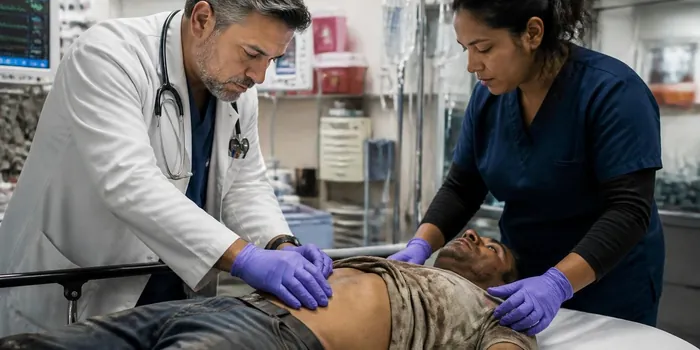
To get carbamate poisoning treated, start with securing the airway and giving oxygen before atropine. Secure the airway by intubation and suction of secretions if needed. Give atropine intravenously until secretions clear. Remove contaminated clothing and wash skin and hair with soap and water. Wear rubber gloves to protect attending staff. Consider gastrointestinal decontamination after recent ingestion. Observe the patient for 24 to 48 hours.
Atropine is a tropane alkaloid and anticholinergic medication used to treat certain nerve agent and pesticide poisonings. The initial adult atropine dose is 1 to 3 mg IV, repeated in 3 to 5 minutes. Each repeat doubles the dose until the patient is atropinized. Children under 12 start at 0.02 mg/kg and double the dose every 5 minutes. The MSD Manual gives 2 to 3 mg IV initially and 0.05 mg/kg in children. An atropine autoinjector delivers 2.0 mg intramuscularly.
Clear breath sounds and absent pulmonary secretions are the primary end point for atropine. Atropine antagonizes excess acetylcholine at muscarinic receptors but does not reactivate the enzyme.
Activated charcoal can be used for ingestion within 1 hour. Atropine is not given prophylactically to exposed workers, because it may mask early symptoms.
L J Fuortes of the University of Iowa College of Medicine reported in 1993 that carbamates produce reversible acetylcholinesterase effects. Symptoms are treated with atropine, that study states.
J V Peter reported in Anaesthesia and intensive care that treatment is primarily supportive. Specific therapy for organophosphates and organocarbamates uses anticholinergics.
Is Pralidoxime Used for Carbamate Poisoning?
It depends. Pralidoxime is not indicated in isolated carbamate poisoning, and atropine alone usually is effective. Pralidoxime is a medication used in the treatment of organophosphate poisoning.
Clinicians consider pralidoxime in mixed carbamate and organophosphate poisoning and in unknown pesticides with muscarinic symptoms. The adult dose is 1 to 2 g IV over 15 to 30 minutes. Children receive 20 to 40 mg/kg over the same period.
M L Mortensen’s 1986 study in Pediatric clinics of North America found pralidoxime therapy may be contraindicated for carbamate intoxications. It should not be withheld in combined or unknown cholinergic poisoning.
J V Peter of Christian Medical College and Hospital called oxime use controversial, especially at high dose. High-dose oxime use may be associated with a higher mortality rate. Oximes such as pralidoxime are of questionable benefit in carbamate toxicosis in animals, and their use may worsen the condition.
Do Carbamate Pesticides Cause Cancer?
It depends. Carbamate pesticides are generally not considered to cause cancer, with two exceptions, carbaryl and carbofuran. Carbaryl and carbofuran can mix with other elements in the stomach to form possible cancerous chemicals.
EPA concluded in 2002 that carbaryl is likely to be carcinogenic to humans. The conclusion rests on hemangiosarcoma in male mice and bladder tumors in male rats.
A 24 month dietary study in CD-1 mice supports the classification. Hemangiosarcoma appeared in 1 of 66 control mice and 8 of 68 high-dose males. The 2008 California OEHHA Proposition 65 listing package 34 records that EPA reconfirmed the classification in 2007.
The International Agency for Research on Cancer runs a monographs programme that identifies carcinogenic hazards. The programme evaluates environmental causes of cancer in humans.
N-nitrosocarbaryl, a possible by-product, was carcinogenic in rats at high doses but has not been detected.
Michael C R Alavanja’s 2012 review found occupational associations with carbamate insecticides among other classes. Not every chemical in these classes was carcinogenic in humans. Further studies are required for specific compounds.
Do Carbamate Pesticides Harm Reproduction?
It depends. Carbamate pesticides harm reproduction in some compounds, such as carbofuran, but not in others. Carbofuran has been shown to cause birth defects or reproduction problems in laboratory animals.
R C Gupta of Murray State University found that carbofuran and its metabolites can cross the placental barrier. They produce serious effects on the maternal-placental-fetal unit.
Carbaryl showed no reproductive or fetal effects in a long-term study of rats fed high doses. Birth defects in rabbit and guinea pig offspring occurred only at doses highly toxic to the mother. No information is available on the reproductive or developmental effects of carbaryl in humans.
Are Carbamate Pesticides Banned or Regulated?
Yes. Carbamate pesticides are regulated, and carbofuran is banned from food use. EPA revoked all carbofuran food tolerances, effective December 31, 2009.
The University of Nebraska CropWatch, Nebraska Department of Agriculture, announced in 2009 that EPA revoked all carbofuran food tolerances. EPA announced on May 11, 2009 that it was formally revoking carbofuran tolerances. Registrants voluntarily canceled flowable and granular carbofuran products on March 18, 2009.
The United States Environmental Protection Agency is an independent agency of the United States government tasked with environmental protection matters. EPA concluded that dietary, worker and ecological risks are unacceptable for all uses of carbofuran. The Federal Insecticide, Fungicide, and Rodenticide Act authorizes EPA to regulate the distribution, sale, production and use of pesticides.
Four food crop uses of carbofuran survive: field corn, potatoes, pumpkins and sunflowers. Two non-food crop uses survive: pine seedlings and spinach grown for seed. The World Health Organization convened a WHO Task Group on Environmental Health Criteria for Carbamate.
EPA found in 2007 that cumulative risks of the N-methyl carbamate class are below the level of concern. The Food Quality Protection Act safety standard covers these tolerances. Congress passed the Food Quality Protection Act unanimously, and President Clinton signed it into law on August 3, 1996.
The US EPA news story from 2007 states that all 9,721 tolerances requiring reassessment have been re-evaluated. Reregistration eligibility decisions for all N-methyl carbamate pesticides are complete.
How Do Carbamate Pesticides Affect Wildlife?
Carbamate pesticides affect wildlife by poisoning bees, insects, fish and birds. Carbamates kill foraging bees and parasitic wasps, because most carbamates are extremely toxic to Hymenoptera. Propoxur is highly toxic to many bird species, although its toxicity varies by species. Propoxur is highly toxic to honeybees.
The University of Florida IFAS Extension EDIS PI-51 from 2005 rates carbofuran, methiocarb and methomyl highly toxic to birds. Oxamyl is very highly toxic to birds.
Carbaryl is lethal to many non-target insects, including bees and beneficial insects. Carbaryl is moderately toxic to aquatic organisms. Its LC50 is 1.3 mg/L for rainbow trout and 10 mg/L for bluegill.
Carbaryl has a half-life of 7 to 14 days in sandy loam soil. In clay loam soil the half-life reaches 14 to 28 days. Carbamates generally last only days to months in the environment.