Quinclorac: Uses, Health Effects, Safety and Regulation

Quinclorac is a quinolinemonocarboxylic acid that works as a systemic herbicide. Foliage and roots both take it up. It is used on turf, pastures, rice, sorghum, bushberries and rights of way. A safe amount each day is 0.34 mg/kg bw/day, the acceptable daily intake. Health effects include decreased body weight gain, moderate eye irritation, and harm from swallowing or skin absorption. It is not a carcinogen, and it persists in soil with a half-life of 168-913 days. It is found in surface water, it leaches into groundwater, and it is not approved in the European Union. In the United States, EPA registration review applies, and gloves over 14 mils thick help people use it more safely.
What Is Quinclorac?
Quinclorac is a quinolinemonocarboxylic acid that is quinoline-8-carboxylic acid with the hydrogens at positions 3 and 7 replaced by chlorines. Quinclorac belongs to the quinolinecarboxylic acid herbicide group, and its substance origin is synthetic. The ChEBI entry CHEBI:81974 for quinclorac, modified in 2016, gives this structure. Its chemical name is 3,7-dichloro-8-quinolinecarboxylic acid, and one EPA label lists 40.0 percent quinclorac by weight. The salt form, quinclorac-dimethylammonium, is a herbicide that is a salt of quinclorac. It serves for post-emergence weed control on grass and turf. The PPDB record from the University of Hertfordshire for quinclorac-dimethylammonium, updated in 2025, gives this use.
How Does Quinclorac Work in Plants?
Quinclorac works in plants as a systemic herbicide, and the foliage and the roots both take it up. Quinclorac acts through auxin activity and inhibition of cell wall synthesis after absorption through foliage. The PPDB record from the University of Hertfordshire on quinclorac, last updated in 2026, describes this mechanism. The 2022 Establishment and comparative ELISA and TRFIA for trace quinclorac in the environment calls it an acid hormone-type herbicide. It selectively controls weeds such as barnyard grass in paddy fields and sorghum fields. The weeds it controls include crabgrass, barnyardgrass, foxtail, clover and dollarweed.
Where Is Quinclorac Used?
Quinclorac is used on ornamental turf, conservation land, pastures, rice, sorghum, bushberries, institutional premises, rights of way and airports. Quinclorac holds these federal registrations, as the 2018 Hawaii Department of Agriculture, Pesticides Branch, quinclorac restricted-use memo lists. The US EPA letter on registration label mitigation for quinclorac, EH-1465, in 2023 calls it versatile. EH-1465 Herbicide controls many troublesome grassy and broadleaf weeds in established turfgrass when used as directed. Label limits protect water: users must not contaminate water by cleaning equipment or disposal of rinsate. Users must not use treated rice fields for the aquaculture of edible fish and crustacea (crayfish). The Federal Insecticide, Fungicide, and Rodenticide Act (FIFRA) is the US federal law behind EPA registration of pesticides and labels.
How Much Quinclorac Is Safe Each Day?
A safe amount of quinclorac each day is 0.34 mg/kg bw/day, the acceptable daily intake (ADI). Quinclorac has an acute reference dose (ARfD) of 1.5 mg/kg bw for a single oral dose. The Food Safety Commission of Japan (FSCJ) conducted the quinclorac risk assessment in 2015. FSCJ applied a safety factor of 100 to the NOAEL. The lowest NOAEL for a single oral dose was 150 mg/kg bw, from an acute neurotoxicity study in rats. Its subacute toxicity tests covered rats, mice and dogs.
What Are the Health Effects of Quinclorac?
The health effects of quinclorac are decreased body weight gain, moderate eye irritation, and harm from swallowing or skin absorption. The US EPA product label (EPA Reg No 42750-169), from 2019, lists the product hazards. Quinclorac affects health in three ways:
- Decreased body weight gain: Decreased body weight gain is the major adverse effect of quinclorac observed in animal testing. A single oral dose has a lowest NOAEL of 150 mg/kg bw in rats.
- Moderate eye irritation: The label states that the product causes moderate eye irritation.
- Harm from swallowing or absorbing through the skin: The same label calls the product harmful if swallowed or absorbed through the skin. Users avoid breathing vapor or spray mist.
Is Quinclorac a Carcinogen?
No. Quinclorac is not a carcinogen, because the 2015 Japanese risk assessment found no carcinogenicity relevant to human health. FSCJ conducted the risk assessment of quinclorac. Its data included a combined chronic toxicity and carcinogenicity study in rats and a carcinogenicity study in mice. Quinclorac did not show neurotoxicity, carcinogenicity, reproductive toxicity, teratogenicity or genotoxicity relevant to human health. Subacute toxicity tests in rats, mice and dogs recorded decreased body weight gain as the major adverse effect.
What Is the First Aid for Quinclorac Exposure?
To give first aid for quinclorac product exposure, rinse the eye slowly and gently with water for 15-20 minutes. Remove contact lenses, if present, after the first 5 minutes, then continue rinsing the eye. Rinse the skin immediately with plenty of water for 15-20 minutes. Call a poison control center or doctor for treatment advice, and take the product container or label along.
How Long Does Quinclorac Persist in Soil?
Quinclorac persists in soil for a long time, with a half-life of 168-913 days in US sources. The PPDB record gives this as the best available data in general literature. That record rates quinclorac as very persistent, with a high alert for environmental fate. It flags pesticide active ingredients that are environmentally persistent. It reports high leachability on the GUS index and mobile drainflow.
Is Quinclorac Found in Surface Water?
Yes. Quinclorac is found in surface water, as monitoring in Brazilian irrigated rice basins shows. The 2007 Springer Ecotoxicology quinclorac risk paper for Santa Catarina, Brazil, reported this finding. Quinclorac was the most frequently detected agrochemical residue, occurring in five of the seven hydrographic basins. The monitoring ran in 1998/1999 and 1999/2000 in basins where irrigated rice is cultivated. Wide concern exists over quinclorac residue because of its potential risks to the environment and human health. Detection methods include enzyme-linked immunoassay (ELISA) and time-resolved fluoroimmunoassay (TRFIA).
Does Quinclorac Leach Into Groundwater?
Yes. Quinclorac leaches into groundwater, because a Hawaii state review determined a likelihood of leaching to groundwater. The Pesticides Branch redid a preliminary groundwater review in 2010. The Branch will designate the active ingredient as restricted use in Hawaii. Quinclorac moves with water: it is very persistent, with GUS high leachability and mobile drainflow. Federal registration covers ornamental turf, conservation land, pastures, rice, sorghum and bushberries.
How Is Quinclorac Regulated in the United States?
Quinclorac is regulated in the United States through registration review at the US Environmental Protection Agency (EPA). The US Environmental Protection Agency (EPA) is the federal agency that registers pesticides and runs their registration review. The US EPA quinclorac registration status page from 2008 lists the case development as underway. The final registration review work plan for quinclorac appeared in May 2008. Docket EPA-HQ-OPP-2007-1135 holds the documents related to EPA’s review. The review produced label mitigation changes for quinclorac. Hawaii’s Pesticides Branch is the state office that proposed restricted-use status for quinclorac. It will designate the active ingredient as restricted use in Hawaii, beyond the federal rules.
Is Quinclorac Approved in the European Union?
No. Quinclorac is not approved for use within the European Union. Quinclorac-dimethylammonium has the status Not approved under GB Retained EC Regulation 1107/2009. The status record covers the salt of quinclorac, a herbicide used on grass and turf. The USDA AMS Cranberry Marketing Committee issues of August 2025 say quinclorac MRLs are scheduled for later reassessment. The European Commission has not yet determined the start date for that review.
What Are the Residue Limits for Quinclorac in Food?
The residue limits for quinclorac in food include a cranberry maximum residue limit (MRL) of 1.5 ppm (parts per million). The European Commission, the EU executive body for food residue limits, set this limit in June 2024. This limit is harmonized with the US, Canadian and Codex limits. Codex Alimentarius is the international food standards body whose residue limits the US and Canada harmonize with. Quinclorac is not approved for use in the EU, and its MRLs are scheduled to be reviewed in the future.
How Can People Use Quinclorac More Safely?
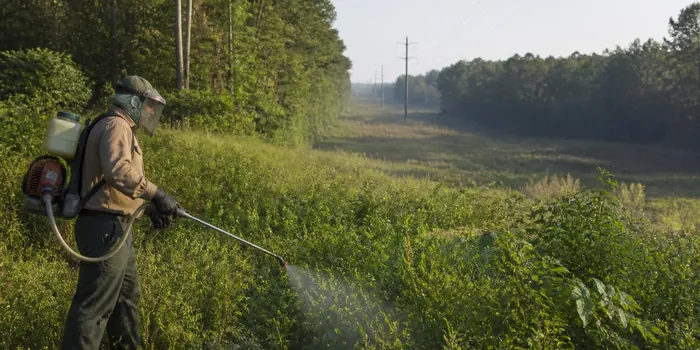
To use quinclorac more safely, people start with chemical-resistant gloves over 14 mils thick. The quinclorac product label allows butyl rubber, natural rubber, neoprene rubber or nitrile rubber gloves. Wear a long-sleeved shirt and long pants. Add a chemical-resistant apron when mixing or loading. Avoid contact with skin, clothing or eyes during use. Wash hands thoroughly with soap and water after handling.