Spinosad: Uses, Health Effects, Safety and Regulation

Spinosad is a natural substance made by a soil bacterium that can be toxic to insects. It works by exciting the insect nervous system, which leads to involuntary muscle contractions and paralysis. It is used to control pests such as thrips, leafminers, spider mites, mosquitoes, ants and fruit flies. Its toxicity to people and other mammals is low. On leaves in sunlight, it persists with a half-life of 2 to 16 days. It is very highly toxic to bees in laboratory tests on wet residue. The EPA has registered it for pesticide use since 1997. People can use it safely by following the label instructions.
What Is Spinosad?
Spinosad is a natural substance made by a soil bacterium that can be toxic to insects. Spinosad is a mixture of two chemicals called spinosyn A and spinosyn D. The US Environmental Protection Agency has registered spinosad for use in pesticides since 1997. More than 80 registered pesticide products contain spinosad, and many are used on agricultural crops and ornamental plants.
How Does Spinosad Work on Insects?
Spinosad works on insects by exciting the insect nervous system, which leads to involuntary muscle contractions and paralysis. Spinosad is a nicotinic acetylcholine receptor channel blocker at Site I, as the Pesticide Properties DataBase lists it. Insects that eat or touch spinosad typically die within 1 to 2 days.
What Pests Does Spinosad Control?
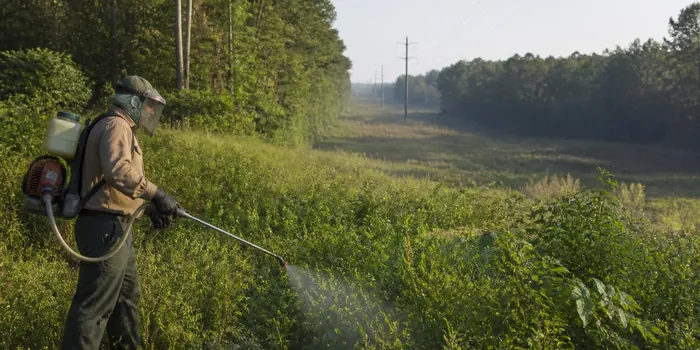
Spinosad is used to control pests such as thrips, leafminers, spider mites, mosquitoes, ants and fruit flies. Spinosad is applied on agricultural crops, ornamental plants, in and around buildings, in aquatic settings and as seed treatments. Fruit fly eradication programs apply spinosad mixed with a sugar bait to trees. Treated pests face the nervous system effects described above.
Is Spinosad Toxic to People?
No. Spinosad is not toxic to people, since its toxicity to people and other mammals is low.
A rat oral LD50 of 7500 mg/kg body weight in males measures its acute toxicity. The female rat oral LD50 is 5268 mg/kg body weight. Spinosad is not a guinea pig skin sensitizer.
A 2020 study by Vanessa Santana Vieira Santos reported that recent toxicity studies detected side effects in different living species. Spinosad was first deemed relatively safe for non-target organisms.
What Symptoms Follow Spinosad Exposure?
Symptoms follow spinosad exposure as eye irritation, skin irritation, redness and temporary respiratory irritation. Key symptoms of spinosad exposure include:
- Eye irritation: Eye irritation is a reaction that follows when spinosad gets in the eyes. The Office of Environmental Health Hazard Assessment (OEHHA), the lead state agency for assessing health risks from environmental contaminants, reports that high concentrations caused temporary slight eye irritation.
- Skin irritation: Skin irritation is a reaction that follows when spinosad gets on the skin. High concentrations caused temporary slight skin irritation in the same tests, so the effect stays mild.
- Redness: Redness is a visible sign of that irritation on the skin or in the eyes. Contact with spinosad can cause it, and it fades with the irritation.
- Temporary respiratory irritation: Temporary respiratory irritation is irritation of the upper respiratory system. Spinosad causes it, and the effect is temporary.
Spinosad symptoms are described as temporary or slight in the sources. Spinosad contact calls for washing skin and clothing if contact occurs.
Is Spinosad Likely to Cause Cancer?
No. The EPA has classified spinosad as not likely to cause cancer. Animals fed low to moderate amounts of spinosad in their diet for 1.5 to 2 years showed no increased cancer.
Spinosad has not been found to alter or damage genes. Laboratory animals tested at very high levels showed that spinosad is not a carcinogen or a mutagen.
Does Spinosad Cause Long-Term Harm?
It depends. Spinosad causes long-term harm in animal studies mostly at the highest doses tested, not at every dose.
Spinosad fed to 28 dogs at low doses for 1 year caused effects to gland and immune cells. Some blood proteins and fats rose in the same study. Developmental and reproductive studies of spinosad showed effects only at the highest doses tested. These effects included lower body weights and effects to some organs. No direct effects to offspring occurred at any dose level.
A study by Vanessa Santana Vieira Santos from the Federal University of Uberlândia found side effects in different species.
What Happens to Spinosad in the Body?
What happens to spinosad in the body starts with absorption, because spinosad is readily absorbed after it is eaten. Spinosad moves to many areas of the body and is broken down. Most spinosad leaves the body in feces or urine within 1 to 2 days. Skin contact absorbs spinosad poorly, so skin absorption stays low.
How Long Does Spinosad Persist in the Environment?
Spinosad persists in the environment with a half-life of 2 to 16 days on leaves in sunlight. How long it lasts varies by setting. Soil half-lives of spinosad run 9 to 17 days because microbes break it down rapidly. In water, the half-life is less than 1 day in sunlight. Without sunlight, it runs from more than 30 days to 259 days. Sediment half-lives range from 161 to 250 days where no oxygen is available.
Is Spinosad Toxic to Bees?
It depends. Spinosad is very highly toxic to bees in laboratory tests on wet residue. Once sprays have dried, it has little or no effect on honey bees.
The Pest Management Regulatory Agency (PMRA) provides access to pest management tools. It minimizes risks to human health and the environment.
A 2002 study by M Miles found spinosad highly toxic to worker honeybees under worst case laboratory conditions. USEPA data cited in the Pesticide Properties DataBase give 3 hours as the residual time to 25% mortality for honeybees.
Is Spinosad Toxic to Fish and Birds?
It depends. Spinosad is practically non-toxic to moderately toxic to fish, depending on the species. It is practically non-toxic to slightly toxic to birds.
Spinosad is very highly toxic to eastern oysters. Studies with bobwhite quail and mallard ducks support the bird rating.
A study by Vanessa Santana Vieira Santos, titled Properties, toxicity and current applications of the biolarvicide spinosad, reported side effects.
Is Spinosad Regulated by the EPA?
Yes. Spinosad is regulated by the EPA, which has registered it for pesticide use since 1997. Spinosad products stay registered only if they meet the standards of the Federal Insecticide, Fungicide, and Rodenticide Act (FIFRA). The EPA reviews registrations every 15 years.
EPA registered spinosad as a reduced-risk material because of its low toxicity and perceived low impact on the environment. EPA sets tolerances for residues of spinosad in food crops.
How Can People Use Spinosad Safely?
To help people use spinosad safely, start by following the label instructions and taking steps to minimize exposure. Wear chemical resistant gloves, coveralls and goggles or a face shield when mixing and loading spinosad. Wash thoroughly with soap and water after handling. Flush the eyes with plenty of water if eyes are affected. Call Poison Control at 800-222-1222 for treatment advice.