Pesticide PPE: Required Protective Gear, Care and Evidence
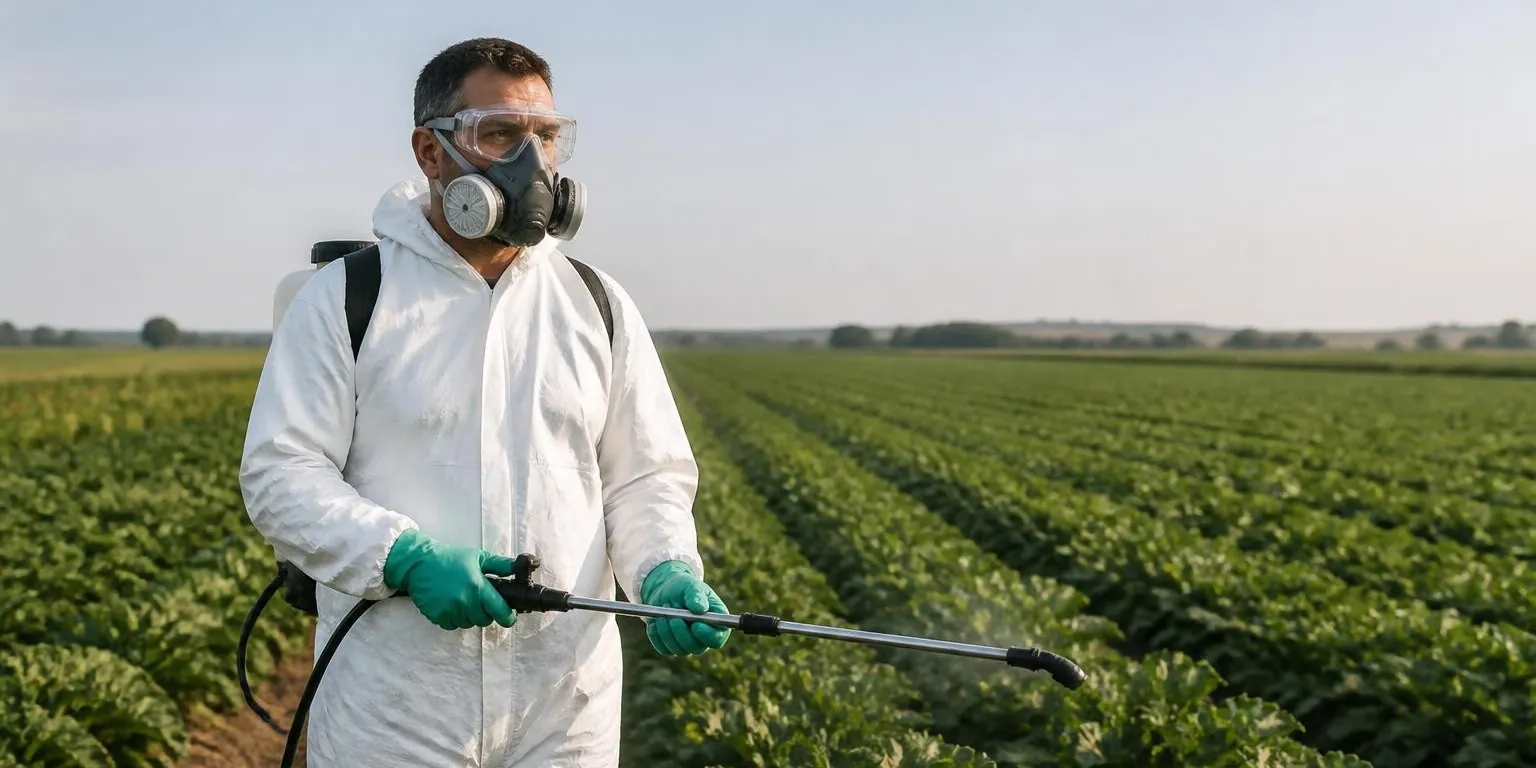
Pesticide PPE is protective equipment that handlers wear to keep pesticides off the body. The pesticide label sets the required PPE and names the items for each handler task. Handlers need protection for the hands, body, feet, eyes, lungs and head. Handler employers must provide it in clean and operating condition under the Worker Protection Standard. PPE such as coveralls reduces exposure to the skin, and it needs cleaning and maintenance to keep working. Many workers still skip it because they believe their usual work clothing is a sufficient barrier. PPE can also cause heat stress, so employers must take steps to prevent heat illness.
What Is Pesticide PPE?
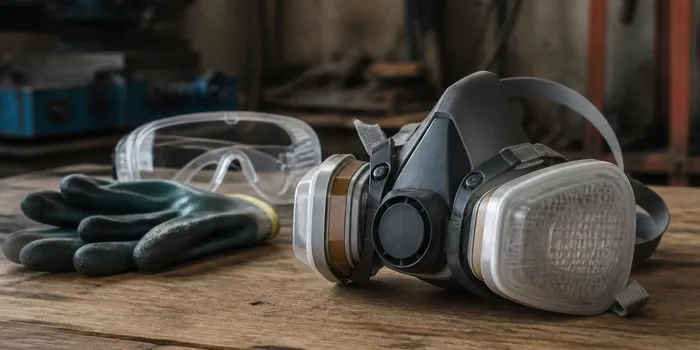
Pesticide PPE is protective equipment that handlers wear to keep pesticides off the body. Pesticide PPE includes coveralls or protective suits, footwear, gloves, aprons, respirators, eyewear, and headgear. Handler employers must provide handlers with the appropriate PPE in clean and operating condition. Labels may include directions for cleaning PPE and handling contaminated clothing. 29 CFR 1910.132 requires the employer to assess the workplace for hazards that call for PPE. The same rule covers the proper care, maintenance, useful life and disposal of the PPE. Farm job decides which body parts show the highest measured dermal exposure. The Pesticide Handlers Exposure Database supplied the generic unit exposures behind many exposure assessments. A 2024 paper by Dorothy Nguyen links inadequate PPE factors to acute pesticide poisoning.
Does the Pesticide Label Set the Required PPE?
Yes. The pesticide label sets the required PPE, and it names the items for each handler task. A label may require long-sleeved shirts, long pants, waterproof gloves, socks, and shoes for applicators and mixers and loaders. Label text may include directions for cleaning PPE and handling contaminated clothing. Federal Insecticide, Fungicide, and Rodenticide Act authority lets the EPA regulate the sale and use of pesticides. 40 CFR Part 156 sets the PPE statements that appear on labels. Chemical-resistant coveralls or two-piece suits may be required for moderate to highly toxic pesticides. When a label lists no PPE, applicators still take precautions to minimize exposure. 29 CFR 1910.132 supports this by calling for PPE that protects against the identified hazards. When a tank mix holds several pesticides, the most restrictive PPE requirement among the products applies. D H Branson found in 1991 that most farmers believe their usual work clothing is a sufficient barrier.
What PPE Do Pesticide Handlers Need?
Pesticide handlers need PPE for the hands, body, feet, eyes, lungs and head, and the label sets which items apply. Footwear matters because handlers may get pesticides on their feet. The label adds a chemical-resistant apron for mixing and loading. Key items include:
- Gloves: Gloves protect the hands, and a good rule of thumb is to throw out gloves worn for about 5 to 7 workdays.
- Coveralls or chemical-resistant suits: Coveralls or suits cover the body and arms. The label decides when a chemical-resistant suit replaces plain coveralls.
- Footwear: Footwear matters because pesticides can reach the feet. Nitrile and butyl boots appear to give the best protection, while canvas or leather boots absorb pesticides and are hard to clean.
- Eye protection: Eye protection shields the eyes from splashes during mixing. The label or the chance of eye contact triggers its use.
- Respirators: Respirators protect the lungs. The label specifies the type when one is required.
- Headgear: Headgear protects the head. The label names the type needed for the task.
A 2020 study by Ratana Sapbamrer found that 66.1 percent of handlers wore a long sleeve shirt. Long sleeve trousers reached 71.1 percent, and a hat reached 47.3 percent. 29 CFR 1910.132 tells employers to select PPE that properly fits each affected employee.
What Gloves Protect Against Pesticides?
Chemical-resistant gloves protect against pesticides, and nitrile, butyl, neoprene and Viton are the main glove materials. Labels refer to EPA chemical resistance categories A to H when they help users select gloves. Current research indicates that nitrile, butyl, and neoprene offer the best protection. Key glove materials include:
- Nitrile rubber: Nitrile rubber resists both dry and liquid pesticides. It comes in reusable and disposable forms.
- Butyl rubber: Butyl rubber is a synthetic rubber that protects well under most conditions and lasts. Cost is the downside, since the gloves are fairly expensive.
- Neoprene: Neoprene offers good protection against dry and liquid pesticides. It sits in the chemical-resistant category named on labels.
- Viton: Viton is flexible and comfortable to wear. It is a good choice of glove material.
- Polyvinyl chloride (PVC): PVC is a plastic glove material listed among the options for pesticide work. The label guides the choice of this material.
- Barrier laminate: Barrier laminates like 4H and Silver Shield are listed glove materials. The label guides the choice of these materials.
Ratana Sapbamrer of Chiang Mai University found that only 40.5 percent of handlers wore gloves. Extra-heavy-duty gloves, such as those made of butyl or nitrile rubber, may last as long as 10 to 14 days. Canvas and leather gloves fail because they absorb pesticide easily and cannot be decontaminated. Waterproof gloves block water-based substances but may not protect against oil-based solvents. EN ISO 374 sets the requirements for gloves that protect against dangerous chemicals. Unlined, elbow-length chemical-resistant gloves are worn when a label requires gloves.
What Clothing Protects the Body From Pesticides?
Protective clothing protects the body from pesticides, and the main garments are coveralls, chemical-resistant suits and aprons. Coveralls are made of sturdy material such as cotton, polyester, denim, or a non-woven fabric such as Tyvek. Key garments include:
- Coveralls: Coveralls are made of sturdy material, so they cover the body. Disposable coveralls such as regular Tyvek, Comfort Guard, Kappler ProVent, and KleenGuard offer some protection from mists. They are not recommended for chemical protection.
- Chemical-resistant suit: A chemical-resistant suit is a rubber or plastic garment. It comes as one-piece coveralls or as a jacket worn over coveralls.
- Chemical-resistant apron: A chemical-resistant apron protects the front of the body. Handlers wear it when repairing or cleaning spray equipment and when mixing or loading a spray tank.
In Reviews of environmental contamination and toxicology, D H Branson reported on coveralls of various materials and designs. That work found that they reduced exposure. The protection depends on the fabric and on design features. Flaps over zippers, elastic at the wrists and ankles, and sealed seams add protection. The ORETF and AHETF now supply handler exposure data that the Agency uses in place of PHED.
What Eye Protection Is Needed for Pesticides?
Eye protection is needed for pesticides when the label requires it or when a chemical could contact the eyes. Shielded safety glasses and full face shields provide good eye protection. They are relatively comfortable and do not cause fogging or sweating. Splashing during mixing is the typical trigger for eye protection. Goggles or shielded safety glasses can be worn with a half-face respirator. Prescription eyeglasses and sunglasses do not count as eye protection for pesticide work. Equipment must meet ANSI Z87.1 standards, which should be indicated on the product or packaging. The International Safety Equipment Association is a trade association of manufacturers of personal protective equipment, with offices in Arlington, Virginia. That association serves as the secretariat for American National Standards Institute standards on eye protection. A 2020 study in Environmental research reported that only 24.3 percent of handlers wore goggles.
When Is a Respirator Required for Pesticides?
A respirator is required for pesticides when the label calls for one. Fumigants, dusts and volatile chemicals most often require it. The label specifies the type. Only respirators approved by the National Institute for Occupational Safety and Health are used. NIOSH is the United States federal agency responsible for research and recommendations that prevent work-related injury, illness, disability, and death. A fit test is required every time a person puts on a respirator. A respirator that does not seal is of little value. Wearing a respirator can be stressful on the body and can exacerbate heart and lung conditions. A medical professional certifies the ability to wear a respirator safely, and respirator use is trained annually. Dorothy Nguyen from the Department of Environmental Health Sciences stressed in 2024 that protection against inhalation is critical. Only 43.2 percent of handlers wore a mask, Ratana Sapbamrer reported in 2020.
How Should Pesticide PPE Be Cleaned and Maintained?
To keep pesticide PPE cleaned and maintained, follow the 4 steps below. Reusable PPE is cleaned before each day of reuse according to the manufacturer instructions. The pesticide labeling may specify other requirements.
- Wash reusable PPE with heavy liquid detergent and water after each use. Clean or replace PPE at the end of each day and within 10 minutes of contact. Nitrile and neoprene gloves can be used for 120 to 160 work hours.
- Remove cartridges and filters before washing the respirator housing. Store respirators and cartridges in an airtight bag, or they may lose their effectiveness.
- Wash pesticide-contaminated clothing separately and never use bleach. Keep contaminated PPE away from other clothing or laundry. Handler employers must inform people who clean or launder PPE, and 29 CFR 1910.132 requires training for each employee who uses PPE.
- Store clean PPE separately from personal clothing and away from pesticide-contaminated areas.
Dorothy Nguyen of the University of California tied inadequate PPE factors to acute pesticide poisoning, so clean gear matters.
How Should Disposable PPE Be Discarded?
To discard disposable PPE, start with the rule that PPE should be discarded once pesticide contaminates it. Disposable PPE is not designed to be cleaned and reused. Discard coveralls and other absorbent materials that are drenched or heavily contaminated with an undiluted pesticide labeled DANGER or WARNING. Make PPE that cannot be cleaned properly unusable as clothing. Follow applicable federal, state, tribal and local regulations for disposal. Replace extra-heavy-duty butyl or nitrile gloves after 10 to 14 days. Choose butyl rubber gloves for durability, because they are made of a synthetic rubber that protects well under most conditions. Avoid thin plastic when the activity could tear it. Use nitrile, neoprene and butyl gloves in reusable or disposable form. Dorothy Nguyen of the Department of Environmental Health Sciences linked inadequate PPE factors to poisoning.
How Often Should Respirator Filters Be Replaced?
Respirator filters should be replaced at the end of 8 hours of cumulative use when no other service-life guidance exists. 42 CFR Part 84 governs the certification of these devices. Respirator filters and cartridges are replaced sooner when the respirator manufacturer or the pesticide labeling says so. Handlers replace a cartridge and move to fresh air when they notice smells or irritation. Handlers keep track of cartridge expiration dates and hours used. Store cartridges in an airtight bag, or they may lose their effectiveness. Under 42 CFR Part 84, NIOSH certifies N-, R-, and P-series filters at efficiencies of 95%, 99%, and 99.97%. A 2024 study by Dorothy Nguyen shows that robust protection against inhalation is critical.
Does PPE Reduce Pesticide Exposure to the Skin?
Yes. PPE such as protective clothing and coveralls reduces pesticide exposure to the skin. Clothing evaluation studies found protective clothing and coveralls of various materials and designs effective in reducing exposure. A 1991 study by D H Branson from Oklahoma State University reported that finding. Usual work clothing does not give sufficient protection with a heavier spray or a spill. A 2024 meta-analysis by Dorothy Nguyen from the Department of Environmental Health Sciences examined inadequate PPE. Inadequate PPE use was associated with increased odds of having acute pesticide poisoning (APP). Inadequate face protection increased the odds of APP. More robust protection against inhalation and dermal contact is critical. Any gaps in comprehensive full-body PPE put workers and exposed populations at APP risk. The Agricultural Health Study is a prospective study of cancer and other health outcomes in licensed pesticide applicators. Applicators and their spouses from Iowa and North Carolina form the cohort. The Pesticide Handlers Exposure Database was the major source of generic unit exposures for the Agency’s assessments.
Which Body Parts Get the Most Pesticide Exposure?
The hands and forearms are the body parts that get the most pesticide exposure. A total of 31 farm studies qualified for review. In 2018, the Journal of Agromedicine published the dermal exposure findings by farm job. Body parts with the highest measured dermal exposure were identified by farm job. Task information standardized the farm jobs into 5 job groups: operators, applicators, mixer-loaders, field workers, and flaggers. The Pesticide Handlers Exposure Database produced a standard exposure guide for common occupational scenarios. Until the late 1990s, recommended unit exposures came only from that database. The Agricultural Health Study collected biospecimens from over 1,600 farmers and pesticide applicators.
Why Do Workers Not Wear PPE?
Workers do not wear PPE because most farmers believe their usual work clothing is a sufficient barrier. Few farmers wear special-purpose protective clothing. Farmers perceive the benefits of pesticides to far exceed any risks, a 1991 study by D H Branson found. A 2020 study by Ratana Sapbamrer from Chiang Mai University covered 121 articles. One hundred and twenty-one articles were eligible for inclusion in this quantitative synthesis. The lowest basic PPE worn was an apron at 8.6 percent, with boots at 42.3 percent. Education level, experience of illness, income, farm size, perceptions, and access to extension and training programs determine PPE use. A life-long education program with training could change the perception and behavior of pesticide handlers sustainably. The Agricultural Health Study began in 1993 to learn how agricultural, lifestyle and genetic factors affect farming populations.
Can PPE Cause Heat Stress?
Yes. PPE worn by workers can cause heat stress, and steps must be taken to prevent heat illness. Heat stress becomes a major concern in Florida’s climate. For WPS-labeled products requiring PPE, the handler employer takes appropriate measures to prevent heat-related illness. Early-entry workers wear PPE only after instruction in the prevention, recognition, and first aid treatment of heat-related illness. Heat measures keep workers in full PPE. Dorothy Nguyen of the University of California warned in 2024 that gaps in full-body PPE put workers at risk.
Who Must Provide PPE Under the Worker Protection Standard?
Handler employers must provide PPE under the Worker Protection Standard, and they supply it in clean and operating condition. Workers use PPE correctly for its intended purpose and follow the PPE manufacturer’s instructions. Persons who handle contaminated PPE wear the gloves that the labeling specifies for mixing and loading the product. Several exceptions apply to PPE required by pesticide product labeling, but none applies when a respirator is required. Employers provide each early-entry worker with instruction on the proper use and removal of the PPE. The Federal Insecticide, Fungicide, and Rodenticide Act requires applicants to show that use will not generally cause unreasonable adverse effects. A study by Dorothy Nguyen of the University of California linked inadequate PPE to poisoning.