Pesticide Safety
Pesticide safety is the practice of protecting the applicator, nearby people, animals, plants and the environment from pesticides. The label is the starting point. It is a legally enforceable document that says how to handle and use a product safely. Seven habits cut exposure before, during and after use. To keep children and pets safe, remove them and their toys from the area before application. Store every product in its original labeled container, and mix only what you need. If exposure happens, follow six steps. Employees also need pesticide safety training each year before they enter areas restricted within the prior 30 days.
What Is Pesticide Safety?
Pesticide safety is the practice of protecting the applicator, nearby people, animals, plants and the environment from pesticides. In 2026 the University of California said pesticide safety education minimizes harm to human health and the environment. Non-chemical control methods are the most effective way to reduce risks posed by pesticides. Accidental poisoning generally arises from misuse through carelessness or ignorance of precautions. A 1977 chapter from Academic Press calls pesticide poisoning 100 percent preventable when hazard factors are controlled. Integrated Pest Management (IPM) is an effective, environmentally sensitive approach that relies on common-sense practices. The Pesticide Safety Education Program teaches farmers, land managers, homeowners and applicators to apply pesticides safely. Congress passed the Food Quality Protection Act (FQPA) unanimously, and President Clinton signed it on August 3, 1996. A 2008 study by R H Rautiainen from the University of Iowa reviewed ways to prevent agricultural injuries. It found five randomised controlled trials with 11,565 participants and three interrupted time series studies.
What Do Pesticide Labels Say About Safety?
Pesticide labels are legally enforceable documents that say how to handle and use a product safely. Pesticide labels carry seven items that matter for safety, and the label is the law. The Federal Insecticide, Fungicide, and Rodenticide Act (FIFRA) lets the Environmental Protection Agency regulate pesticide sale, production and use. Key items include:
- Brand name: The brand name is the largest word on the label. It identifies the product but says nothing about its hazards.
- Active ingredients: The active ingredient list names the chemicals and quantities in a product. It helps compare brands, but it does not rank their risk.
- Signal word: The signal word is DANGER, WARNING or CAUTION. It shows acute toxicity only.
- Hazards to Humans: This section lists the health risks of the product. It tells users which human and environmental risks to expect before use.
- Directions for use: These directions give the proper rate, mixing and application steps. They limit use to approved sites, plants or animals, rates, frequency and distance to harvest.
- Protective equipment: This section names the clothing and gear the label requires. Users must follow it exactly because the label sets who may use a product and how.
- First aid: The front panel gives first aid directions. These directions help in the first minutes, before medical care arrives.
Requirements for pesticide labels appear in 40 CFR Part 156. The Pesticide Product Label System (PPLS) of the Environmental Protection Agency lets users search for labels. Hazard statements and pictograms of the Globally Harmonized System should not appear on most United States pesticide labels. A 2017 study by Mustapha F A Jallow surveyed 250 farmers in Kuwait. Over 70% did not read or follow label instructions. Of those farmers, 58% used no personal protective equipment.
What Do Pesticide Signal Words Mean?
Pesticide signal words mean the acute toxicity of a product is high, moderate or slight. Pesticide signal words describe the short-term toxicity of the formulated product. Key signal words include:
- DANGER: DANGER means the product is highly toxic by at least one route of exposure and may be corrosive. Oral LD50 up to 50 mg/kg falls in this category.
- WARNING: WARNING indicates the product is moderately toxic if eaten, absorbed through the skin or inhaled. Oral LD50 over 50 to 500 mg/kg falls in this category.
- CAUTION: CAUTION means the product is slightly toxic or causes only slight eye or skin irritation. Oral LD50 over 500 to 5000 mg/kg falls in this category.
The test showing the highest toxicity sets the signal word, so one high-toxicity route is enough for DANGER. The Environmental Protection Agency assigns the signal word on the most sensitive route of entry. Products in the lowest toxicity category by all routes need not display a signal word. The Globally Harmonized System of Classification and Labelling of Chemicals (GHS) promotes standard criteria for classifying chemical hazards worldwide. The University of Georgia Cooperative Extension in 2008 notes that signal words say nothing about chronic risks such as cancer. The draft human health risk assessment concludes that glyphosate is not likely to be carcinogenic to humans.
What Are the Key Pesticide Safety Precautions?
The key pesticide safety precautions are seven habits that cut exposure before, during and after use. Pesticide safety precautions begin with the label rate and sprayer setup, and end with hygiene. Key precautions include:
- Read the label: Reading the label means following its directions to the letter. Twice the amount of pesticide does not do twice the job, so extra product only adds risk.
- Wear protective clothing: Protective clothing follows the label and includes impermeable gloves, long pants and long-sleeve shirts. Closed-toe shoes add coverage to the label’s requirements.
- Mix only what is needed: Mixing only what is needed avoids storing or disposing of excess pesticide. Mixing is the most dangerous step because it involves the concentrated form.
- Calibrate the sprayer: Calibration confirms the sprayer delivers the right amount of product per acre or square foot. It takes time before the job, but it prevents overuse.
- Avoid wind and rain: Avoiding windy and rainy days prevents drift and runoff. Spraying must wait for better weather.
- Keep records: A log book notes the applicator name, product, date and time, rate, target pest, location and weather. These notes help later reviews.
- Wash up: Washing up means changing clothes and washing hands immediately after use. Hands must be clean before smoking or eating.
A 2024 systematic review by Mehdi Kangavari from Shahid Beheshti University of Medical Sciences covered 39 studies. It found that knowledge, attitude, risk perception and intention shape farmers’ protective measures against pesticide exposure.
What Safety Gear Is Needed When Using Pesticides?
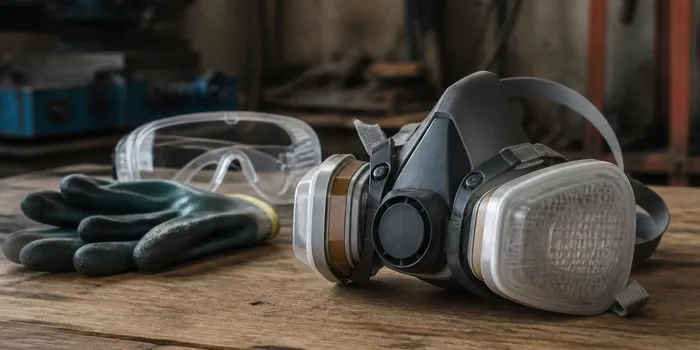
The safety gear needed when using pesticides starts with a long-sleeved shirt, long pants and chemical-resistant gloves. Extra equipment such as goggles, a face shield or a respirator depends on the pesticide label. Key gear includes:
- Long-sleeved shirt and long pants: This clothing is the baseline coverage. Single-layer clothing lets some pesticide through, so it works best with the other items.
- Chemical-resistant gloves: These gloves protect the hands. A fluorescent dye demonstration shows a gloved hand staying clean while an unprotected hand is covered.
- Closed-toe shoes or rubber boots: These shoes protect the feet. Rubber boots belong to the baseline clothing set.
- Wide-brim hat: This hat covers the head. It forms part of the baseline clothing.
- Goggles or face shield: These items protect the face when the label requires them. The label decides whether they are needed.
- Respirator: A respirator filters the air when the label requires one. Employers provide a medical evaluation, fit test and training to handlers who must wear one.
A filtering facepiece respirator is replaced after a maximum of 8 hours of cumulative use when no other instructions exist. Handler employers provide PPE in clean and operating condition and inspect it before each day of use. Heavily contaminated garments are thrown away, and other exposed clothing is washed separately. Fit testing must conform to 29 CFR 1910.134.
A 2014 study by Eric S Miguelino measured pesticide penetration through single-layer clothing. Penetration ranged from 6.2% to 21.4% depending on body part. A 2020 study by Ratana Sapbamrer found long sleeve shirts (66.1%) and trousers (71.1%) were the most worn basic gear. Gloves were worn by 40.5% of handlers and goggles by 24.3%.
How to Mix and Apply Pesticides Safely?
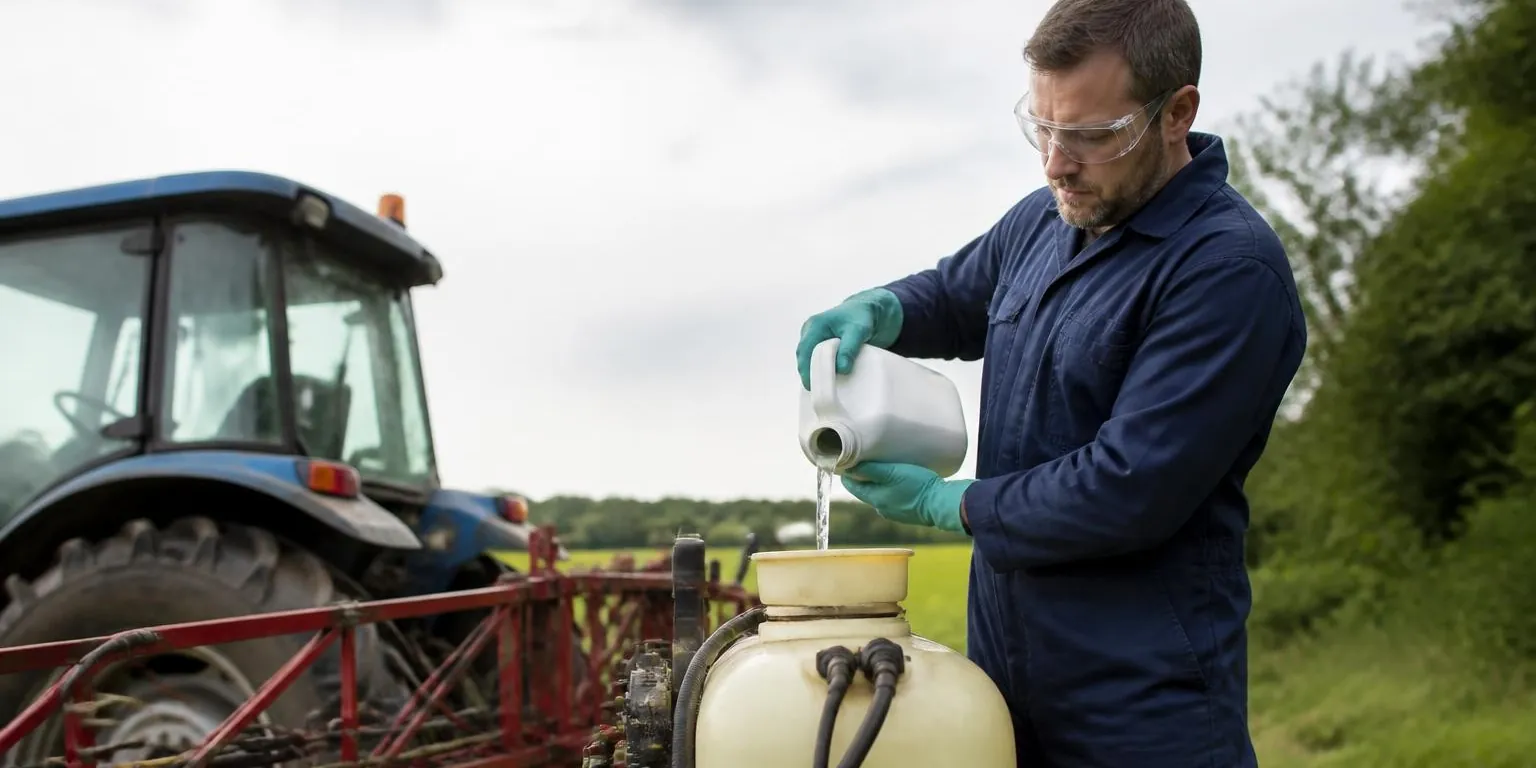
To mix and apply pesticides safely, start with the protective clothing the label requires before opening the container. Mix pesticides outdoors, or indoors with good ventilation, as far from wellheads and any water source as possible. Measure with marked tools and keep the fill hose above the liquid level. Never leave the sprayer unattended while filling. Spray only in calm, dry conditions.
The dermal route comprises 87 to 95 percent of a handler’s exposure, found a 1992 study by R Rutz. Hand spraying presented the greatest exposure risk of the application methods in that study. Spraying on windy days causes pesticides to drift from one area to another. The Environmental Protection Agency is actively engaged in several initiatives to minimize pesticide drift problems. Pesticides are mixed outside when possible to avoid fumes. The fill hose discharge end stays above the tank liquid level to prevent backsiphoning into the water source. Requirements during applications to protect handlers, workers and other persons appear in 40 CFR 170.505.
How to Keep Children and Pets Safe From Pesticides?
To keep children and pets safe from pesticides, start with removing children, toys and pets from the area before application. Keep children and pets away until the pesticide has dried or as the label recommends. Lock pesticides and harmful products in a cabinet fitted with safety latches, out of a child’s reach. Seal child-resistant packaging tightly after every use. Post the Poison Control number, 1-800-222-1222, near every telephone in the home.
Penn State Extension reported in 2025 that storing pesticides in food containers is the number one cause of oral exposure. A nationwide study found that almost 1/2 of households with children under 5 had at least one pesticide within reach. Flea and tick treatments used on pets can be transferred to children. Disinfectants, roach baits, rodent poisons, weed killers and pool chemicals all belong out of children’s reach. Children learn that pesticides are poisons and must not be touched.
A 2008 study by Rosaura de Farias Presgrave covered 2810 calls to two poison control centers in Rio de Janeiro. Children under five were the most vulnerable group. Ingestion was the exposure route in 90.4% of calls. Causes included products within children’s reach and storage in soft drink bottles. Project LEAF training materials come in a bilingual, low-literacy format. They offer advice on reducing or even eliminating the chance of exposing children to pesticide residues.
How to Store Pesticides Safely?
To store pesticides safely, start with keeping every product in its original labeled container. Store pesticides in a locked, ventilated storage area away from food, feed, open flames, ponds, streams and wells. Hold the temperature between 40 and 90 degrees Fahrenheit. Buy only the quantity needed for the season.
In 2022 Oregon State University advised keeping stored pesticides away from food and animal feed. Keep the pesticide inventory as low as possible. Never store pesticides in food or drink containers. Original containers carry the correct cap and the label with first aid and spill instructions. Shelves are metal or plastic, with dry chemicals stored above liquids. Liquid containers sit in an additional plastic tray to contain leaks.
Containment regulations for stationary containers of 500 gallons or larger cover agricultural pesticide storage. The Environmental Protection Agency regulates storage in small containers through label instructions. Some states add their own rules, and local ordinances may add fire, building and zoning codes. Improper storage makes food containers the number one cause of oral exposure to pesticides. A 2014 study by Elikana E Lekei found that 79% of 121 Tanzanian farmers stored pesticides in the home. Farmers with higher education were less likely to do so.
How to Clean Up and Dispose of Pesticides Safely?
To clean up and dispose of pesticides safely, start with mixing only what is needed. Rinse equipment away from wellheads, ditches and streams to keep leftover pesticide out of water. Triple rinse containers. Cover a spill with absorbent material, dike a large spill with sand or soil, and never hose it down. Use a state Clean Sweep or hazardous waste program for unwanted product.
Triple rinsing drains the container for 30 seconds, fills it one-fourth with water and rotates it. The rinse then repeats at least two more times.
Pesticide disposal falls under the Resource Conservation and Recovery Act (RCRA), and some pesticides count as hazardous waste. Farmers and commercial users generally cannot use household hazardous waste programs. Many states run Clean Sweep programs for them. The Pesticide Stewardship Alliance keeps a State Pesticide Disposal Database with a contact in each state.
A 2008 study by Christos A Damalas found 33.3% of Greek farmers threw empty containers near or into canals. Another 17.9% burned the containers in open fire, and 54.9% re-sprayed leftover solution in the treated field.
What to Do After Pesticide Exposure?
To handle pesticide exposure, follow the 6 steps below. Eye exposure can damage the eyes within minutes with some pesticide types.
- Call 911 if the person is unconscious, has trouble breathing or has convulsions, because these signs mean a life-threatening emergency.
- Check the label for first aid directions, and induce vomiting only if emergency personnel or the label say so.
- Call the Poison Control Center at 1-800-222-1222 for first aid help, and call NPIC at 1-800-858-7378 for product toxicity information.
- Rinse a splashed eye gently with clean running water for at least 15 minutes without eye drops, or drench exposed skin with water, remove contaminated clothing and wash skin and hair with soap and water.
- Move a victim of inhaled exposure to fresh air, which removes the person from the source.
- Take the label or safety data sheet to the doctor or hospital, so clinicians know the product.
A 2016 study by Hanjiang Zhu tested a soap-water wash on human epidermis in vitro. The wash resulted in greater paraoxon penetration at 90 minutes than no wash. This wash-in effect depended on the chemical and the time since exposure.
What Are the Symptoms of Pesticide Poisoning?
Pesticide poisoning symptoms range from fatigue and nausea in mild cases to chest discomfort and convulsions in severe cases. Severity depends on the particular pesticide and the amount absorbed. Key symptoms include:
- Fatigue: Fatigue is a sign of mild poisoning. It may appear with nausea or headache.
- Nausea: Nausea is a sign of mild poisoning. It may come with fatigue.
- Headache: Headache is a sign of mild poisoning. It may come with dizziness.
- Blurred vision or dizziness: These symptoms are signs of mild poisoning. They may follow fatigue, nausea or headache.
- Chest discomfort: Chest discomfort is a sign of severe poisoning. It calls for urgent care.
- Muscle twitches: Muscle twitches are signs of severe poisoning. They may come before breathing difficulties.
- Breathing difficulties or convulsions: These symptoms are signs of severe poisoning. They call for a 911 call.
Mild poisoning may cause fatigue, nausea, headache, blurred vision or dizziness. Severe poisoning may cause chest discomfort, muscle twitches, breathing difficulties or convulsions. Mustapha F A Jallow found in 2017 that 82% of 250 Kuwaiti farmers reported an acute poisoning symptom.
A 1987 study by J Tafuri concluded that prompt recognition and aggressive treatment of acute organophosphate intoxication are essential. This approach minimizes morbidity and mortality. The Environmental Protection Agency’s poisoning manual gives healthcare providers toxicology and treatment information for pesticide exposures.
What Pesticide Safety Training Is Required?
Pesticide safety training is required each year before employees enter areas restricted within the prior 30 days. The Worker Protection Standard lets only a certified applicator or another approved individual conduct the training. The University of Maine Cooperative Extension in 2018 lists the training topics. Training covers where exposures occur, routes of entry, signs of poisoning, sensitive individuals, drift and residues, and emergency care. Topics include application exclusion zones and restricted-entry intervals. Handlers learn label interpretation, equipment use, heat illness, first aid, respirators and spill cleanup as well. Approved training materials for national use appear on the WPS Materials webpage of the U.S. Environmental Protection Agency. Training materials with the expanded content of the 2015 Worker Protection Standard train workers and handlers. California employers train non-agricultural handlers before work, with new pesticides and each year. A handler must be at least 18 years old to mix or load certain pesticides. Those pesticides require an air-supplied respirator, a closed system or full-body chemical-resistant clothing. Employers keep records of applications and training for 2 years. Donna L Levesque studied 187 Hispanic farmworkers in North Carolina in 2012. Farmworkers trained through extension offices or growers associations used PPE far more.
What Does the Worker Protection Standard Require?
The Worker Protection Standard requires employers to give workers and handlers training, information, decontamination supplies, equipment and protection from retaliation. The Worker Protection Standard covers over 2 million workers and handlers at over 600,000 agricultural establishments. Handlers mix, load or apply pesticides, clean application equipment or assist, and workers do tasks in growing and harvesting plants. Employers post application information, safety data sheets and emergency details at a central location. Employers keep application and training records for two years and display application information until 30 days after the restricted-entry interval. A designated representative is a person a worker or handler names in writing to request application and hazard information. Decontamination sites sit within 1/4 mile of workers and hold water, soap, towels, a clothing change and eyewash. Decontamination sites supply 1 gallon of water per worker and 3 gallons for handlers. Restricted-entry intervals keep workers out of treated areas. Employers provide, maintain and fit-test PPE and respirators. Employers arrange emergency transportation to a medical facility with product information. Handlers using DANGER pesticides are checked by voice or visual contact at least every 2 hours. A 1999 study by T A Arcury found about a third of 270 farmworkers ever received safety training. Only 25.6% reported training in the year of the interview, and few knew how they could be exposed.
How Large Is the Application Exclusion Zone?
The application exclusion zone is as large as 100 feet for high-drift applications and 25 feet for low-drift ones. The application exclusion zone (AEZ) is a temporary, mobile no-entry area around outdoor application equipment. Droplet size and application type decide between a radius of 25 feet and a radius of 100 feet. Handlers suspend the application when anyone is in the AEZ and resume only after people leave. The immediate family exemption lets farm owners and their immediate family stay inside enclosed structures or homes in the AEZ. It excludes employees. In September 2024, the Environmental Protection Agency finalized a rule to restore the AEZ requirements under the 2015 WPS. A 2024 study by Sonia Grimbuhler tested bystander exposure to vineyard spray drift with 72 t-shirts on manikins. Average exposure decayed exponentially at 3.3, 5, 10 and 20 m. A hedgerow flattened the exposure curves.
Who Must Be Certified to Apply Pesticides?
Private applicators using restricted use pesticides must be certified to apply pesticides. Federal law requires commercial applicators using restricted use pesticides and persons who supervise restricted use pesticide applications to be certified. State, territorial and tribal authorities certify applicators, and certification is needed in each state of application. Many states require all commercial applicators, not only restricted use pesticide users, to be certified. The final rule of 2017 sets a minimum age of 18 for private and commercial applicators. 40 CFR Part 171 establishes minimum standards of competency for applicators of restricted use pesticides. Most states run a Pesticide Safety Education Program that offers training and study materials. The revisions to the Certification of Pesticide Applicators (CPA) rule help ensure restricted use pesticides are used safely. A 1997 report in Preventive medicine found the effectiveness of applicator certification could not be determined. Federal and state survey data were lacking.
What Is the EPA Pesticide Safety Poster?
The EPA pesticide safety poster is the Worker Protection Standard poster that employers display in a central location. The EPA WPS safety poster hangs at a decontamination site that is permanent or serves more than 10 employees. Project LEAF (Limiting Exposures Around Families) is a program developed by the Association of Farmworker Opportunity Programs. The program seeks to increase awareness of take-home exposure risks to farmworkers and their families through training and materials. The Project LEAF poster, EPA number 735H11001, comes in Spanish and English. One free copy of the materials is available by calling (800) 490-9198 with the EPA document number. Project LEAF materials include a fold-out card, poster, magnet, brochure and radio program CD. California workplaces display the N-8 leaflet at a central location with the blanks filled in. A 2022 study by Joseph G Grzywacz tested video training from the Environmental Protection Agency in 339 farmworkers. The video improved short-term knowledge, but participants lost it at 3 months. Facilitator-led training retained knowledge and showed greater pesticide safety behavior.