Pesticide Respirator: Types, Selection, Fit and Care
A pesticide respirator is protective equipment that keeps the wearer from breathing pesticide-contaminated air. The product label decides which model you need. Before use, a medical evaluation is required, and 40 CFR 170.507 makes the handler employer provide it. A fit test comes after the evaluation. Cartridges reach the end of their default service life after 8 hours of cumulative use when no other guidance exists. After use, remove the filters and cartridges before cleaning. The Worker Protection Standard sets five duties for respirators. A half-mask is not enough for fumigants or for a gas applied in an enclosed area.
What Is a Pesticide Respirator?
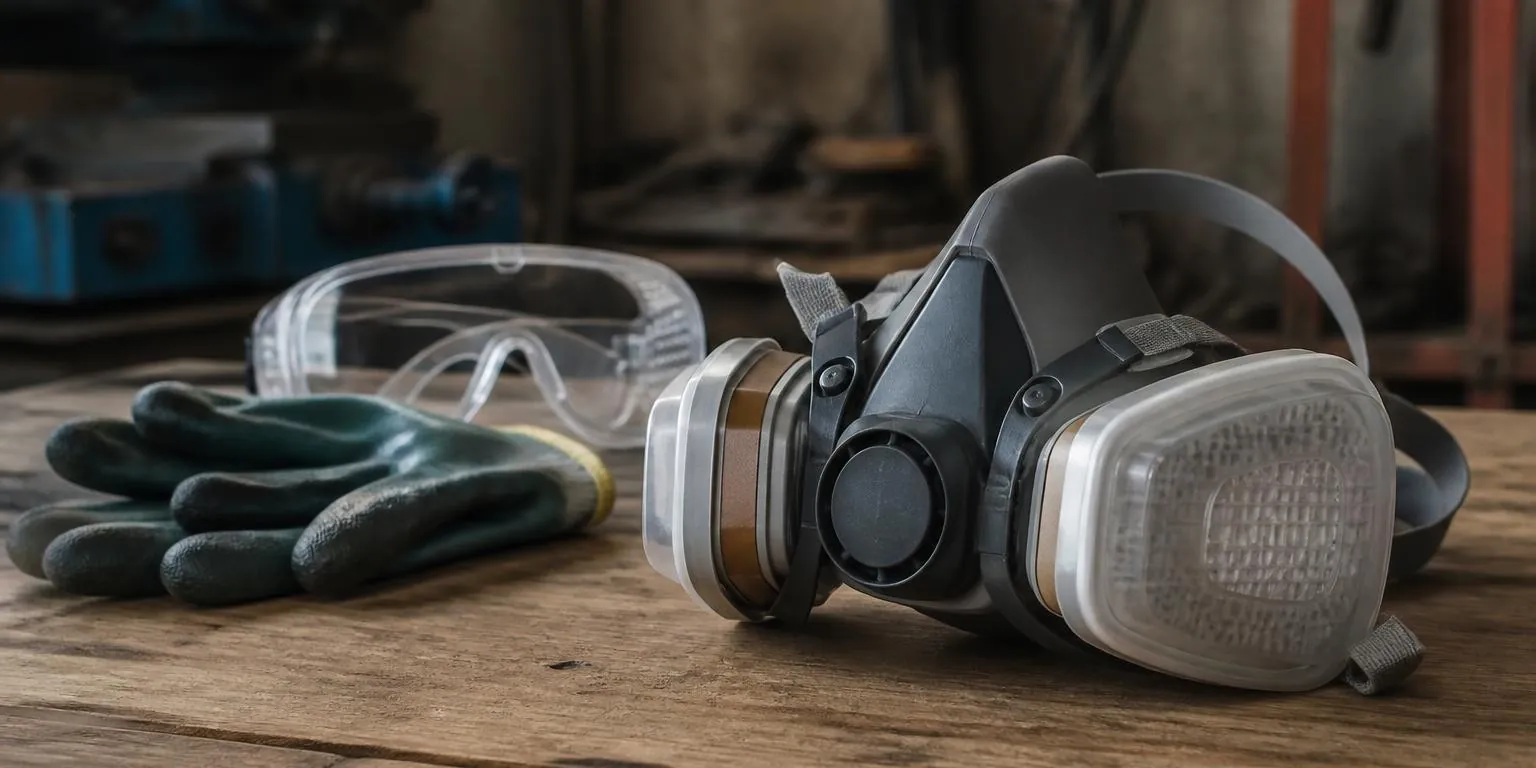
A pesticide respirator is protective equipment that keeps the wearer from breathing pesticide-contaminated air. The pesticide respirator is the most specialized piece of personal protective equipment for working with pesticides. For many toxic chemicals, the respiratory system is the quickest and most direct route into the circulatory system.
The National Institute for Occupational Safety and Health (NIOSH) tests and certifies the respirators used with pesticides. NIOSH approval numbers begin with the letters TC.
Respirator cartridges are filled with activated carbon, which has a very high absorption capacity for gases and vapors. Mechanical filters trap particulate matter in porous filter material.
Airborne particles less than 10 micrometers in diameter can pass freely to the lungs. Respirators labeled only for particulates must not be used for gases and vapors, and the reverse holds. Cartridges and filters supply no oxygen, so they are not used where oxygen may be limited.
A 2010 study by Jonathan N Hofmann followed 154 agricultural pesticide handlers. Full-face respirator use was among the factors protective against serum cholinesterase inhibition.
What Types of Pesticide Respirators Exist?
Six types of pesticide respirators exist, and respirator classes split them into air purifying and air supplied. Pesticide respirators in the air-purifying class clean the air, while those in the air-supplied class bring their own air. Key types include:
- Particulate respirators: A filter traps solid particles and filters liquid particles such as pesticide mist. Filters alone give no protection against vapors.
- Gas and vapor respirators: A cartridge absorbs gases and vapors, and these units are called single cartridge respirators. A chemical cartridge respirator rates good in the protection ranking.
- Combination respirators: A particle filter joins a vapor cartridge, so one unit handles particles and vapors together.
- Gas masks: A full facepiece connects to one canister, and the ranking rates this design good.
- Powered air-purifying respirators: A fan drives air through the filters, and this is the only air-purifying type that operates under positive pressure. The ranking rates it best.
- Supplied-air respirators and SCBA: An independent air supply feeds the wearer. Supplied-air respirators carry NIOSH approval TC-19C and the self-contained breathing apparatus carries TC-13F.
Most air-purifying respirators operate under negative pressure, while the powered air-purifying respirator runs under positive pressure. A half-mask covers the nose and mouth, while a full facepiece covers the eyes too.
The assigned protection factor category 3 covers filtering facepieces and half masks with elastomeric facepieces.
Supplied-air respirators serve conditions where oxygen is deficient or very toxic pesticides are used in enclosed areas.
The Penn State comparison table covers 5 air-purifying types. It rates the dust mask none, the particulate filter some and the gas mask good.
A 2021 study by Samy Rengasamy compared elastomeric half-mask models with P100 filters and with N95 filters. Models with P100 filters showed smaller total inward leakage, so leakage was inversely related to filter efficiency.
How Do You Choose a Pesticide Respirator?
To choose a pesticide respirator, you start with the label, because selection depends on the model the product requires. Match the pesticide respirator to the filter or cartridge code printed on the label. Confirm NIOSH approval through the TC number on the respirator. Complete a medical evaluation next. Pass a fit test before using the model. Delay the purchase until both are done. Filter efficiency affects leakage, as Samy Rengasamy showed in 2021.
The NIOSH Certified Equipment List (CEL) is a public domain database of respirators approved by NIOSH. It is ordered by respirator type. Approval numbers beginning with the letters TC identify NIOSH-certified respirators.
The Occupational Safety and Health Administration (OSHA) requires the employer to provide a respirator adequate to protect the employee’s health. The user first weighs the degree of hazard of the toxic substance. The user then weighs the uses and limitations of the available equipment.
Selection factors include the formulation, toxicity and type of application. Mixing and loading often needs more protection than application.
Selection sequence matters: medical clearance comes before the fit test. The fit test uses the make, model, style and size used on the job.
What Does a Pesticide Label Say About Respirators?
What a pesticide label says about respirators appears in the label PPE statement. That statement sits in the precautionary statements section on hazards to humans and domestic animals. Label respirator entries often specify the type by listing its TC number.
The Federal Insecticide, Fungicide, and Rodenticide Act (FIFRA) authorizes the EPA to regulate distribution, sale, production and use of pesticides. If a label states that a specific respirator is to be worn, not wearing that type is illegal.
Label PPE requirements vary with the task, so a single product label can list more than one respirator.
A label respirator statement for a liquid, Toxicity Class I pesticide may read: use a NIOSH-approved respirator. It names an organic vapor cartridge or canister with any 100, N, R or P series prefilter. A gas applied in an enclosed area calls for an air-supplying respirator or a self-contained breathing apparatus.
Older label terms such as NIOSH/MSHA, dust/mist and pre-filter approved for pesticides still appear on some labels.
A 1994 study by G Avory interviewed 84 agricultural workers. Compliance was lower for personal protective equipment recommendations. Only 38% said they always read all of the label on first use.
What Do N, R and P Pesticide Respirator Filter Ratings Mean?
The N, R and P ratings on a pesticide respirator filter mean oil resistance. The efficiency number after the letter shows the minimum share of particles the filter traps. These ratings follow 42 CFR Part 84, which replaced MSHA rules at 30 CFR part 11. The rule upgraded testing for particulate filters. Key ratings include:
- N: N filters are not resistant to oil. They suit dusts and granular formulations.
- R: R filters resist oil for up to 8 hours of use.
- P: P filters are oil proof.
- 95, 99 and 100: The number sets the minimum filter efficiency.
- HE: HE filters are high efficiency filters for powered air-purifying units.
Minimum efficiencies of 95, 99 and 99.97 percent are tested against particles of at least 0.3 micrometers.
A 100 filter gives more filtration but is harder to breathe through. It could cause elevated blood pressure or difficulty breathing.
P100 filters pair with chemical cartridge respirators for oil-based pesticides, as label recommendations generally instruct.
A 2009 study by Jonathan P Eshbaugh tested NIOSH-approved N95 and P100 filters under high constant and cyclic flow. Penetration rose at higher flow. The most penetrating size ranged from 0.05 to 0.2 micrometers for P100 filters. It was about 0.05 micrometers for N95 filters.
What Do Pesticide Respirator Cartridge Colors Mean?
Pesticide respirator cartridge colors mean the gas or vapor each cartridge absorbs. Each pesticide respirator cartridge carries one color code. Key colors include:
- Black: Black cartridges protect against organic vapors, which covers most pesticides except fumigants unless the label allows.
- Green: Green cartridges protect against ammonia.
- Yellow: Yellow cartridges protect against acid gases.
- Olive: Olive cartridges combine protection against organic vapors, ammonia and acid gases. They have a relatively short life against pesticides.
- Pink: Pink cartridges protect against dusts and welding fumes.
Organic vapor cartridge wording appears on most labels with a cartridge requirement, color-coded black. A few labels require another type, so the label must be checked closely.
In 1987, E S Moyer measured methyl isocyanate breakthrough through organic vapor and acid gas cartridges. Breakthrough times at 1% of challenge concentration were generally less than 20 min. High relative humidity shortened them. Cartridge life depends on contaminant type and concentration, breathing rate and humidity.
Is a Dust Mask Enough for Pesticides?
No. A nuisance dust mask is not enough for pesticides because it is not NIOSH approved. It offers minimal protection due to poor sealing. A disposable one-strap mask is not recommended, and an NIOSH-approved N95 filtering facepiece is the minimum.
An N95 respirator is the minimum for mists, dust or mold, with 95 percent minimum filter efficiency. Particulate air filters may be used in some pesticide situations but never when mixing or applying pesticide liquids. Respirators protect applicators from airborne chemicals or dusts that may cause temporary or permanent harmful health effects, including death.
Pest manager guidance states that a paper disposable mask is not fit for purpose.
A 2020 study by Emily E Sickbert-Bennett tested respirators not listed as approved. All 6 failed to achieve 95% fitted filtration efficiency. N95 respirators in the wrong size dropped to 90%-95%.
Is a Medical Evaluation Required for a Pesticide Respirator?
Yes. A medical evaluation is required for a pesticide respirator, and 40 CFR 170.507 makes the handler employer provide it. The pesticide respirator may be used only after a physician or other licensed health care professional completes the evaluation.
The Worker Protection Standard requires handler employers to provide a medical evaluation that conforms to 29 CFR 1910.134. The evaluation ensures the handler’s physical ability to safely wear the respirator specified on the pesticide product labeling.
The evaluation comes before the fit test and before respirator use. The online exam takes about 35 minutes, and 98 percent of people receive clearance through the online system.
Respirator use can pose a health risk with high blood pressure, asthma or claustrophobia. Respirators can be hazardous to people with heart and lung problems. Wearing a respirator puts extra strain on the lungs and can cause blood pressure to rise.
A medical evaluation is still needed for loose-fitting respirators such as helmets and hoods, which need no fit test.
The employer provides respirators, training and medical evaluations at no cost to the employee. An employer may not terminate employment or reduce pay because of a failed respirator medical evaluation.
A 2010 study by Raymond J Roberge followed 10 health care workers. They wore an elastomeric respirator. About half had transcutaneous carbon dioxide above the upper limit of normal after 1 hour.
How Is a Pesticide Respirator Fit Tested?
To have a pesticide respirator fit tested, start with a completed medical evaluation. Choose a qualitative or quantitative test for the pesticide respirator. Use the same make, model, style and size of respirator that the job requires. Record the result.
The fit test determines whether the respirator forms a complete seal with the face. Fit testing follows the protocols in appendix A of 29 CFR 1910.134.
The OSHA Appendix A fit test procedures apply to all OSHA-accepted fit test methods, both QLFT and QNFT. The qualitative test has the wearer breathe a test agent under a hood. The wearer reports any taste of it, so the test is pass or fail.
The Bitrex qualitative fit test starts with a taste threshold screening, performed without wearing a respirator. The screening determines whether the person being tested can detect the taste of Bitrex.
A 2000 study by S J Clapham from the University of Utah ran 79 paired tests of N95 filtering facepieces. Bitrex qualitative fit testing produced more failures than TSI Portacount quantitative testing for acceptable fits.
Quantitative fit testing uses a machine to measure the actual amount of leakage. A particle-counting instrument compares dust concentration outside and inside the respirator, and the ratio is the fit factor.
Test subjects perform the exercise procedure specified for the CNP quantitative fit testing protocol. A fit factor of 100 or more passes for tight-fitting half facepieces. A fit factor of 500 or more passes for tight-fitting full facepieces.
The user seal check is performed in addition to the fit test each time the respirator is put on. In the negative pressure check, the wearer covers the cartridges with the hands and inhales gently. The wearer holds the breath for 10 seconds.
A 2011 study by Quinn Danyluk tested 643 naive subjects who judged their seal adequate by user seal check. Of them, 158 (25%) failed the quantitative fit test and 92 (14%) failed the qualitative fit test.
How Often Is a Pesticide Respirator Fit Test Required?
A pesticide respirator fit test is required at least once per year for a tight-fitting facepiece under 29 CFR 1910.134(f)(2). The wearer is tested before initial use, with each different facepiece, and at least annually.
Additional fit test triggers include facial scarring and cosmetic surgery. Dental changes and an obvious weight change count as triggers.
A fit test is repeated when the handler switches facepiece models, styles or sizes. The annual test applies to each respirator type, including particulate filtering face masks. Loose-fitting respirators such as hoods and helmets do not require fit testing.
Handler employers keep records documenting medical evaluation, training and fit test completion for 2 years.
A 2016 study by Ziqing Zhuang tracked 229 subjects. Predicted risk of unacceptable N95 fit rose from 10% at Year 1 to 20% at Year 2. It reached 25% at Year 3.
Can a Pesticide Respirator Be Worn With a Beard?
No. A tight-fitting pesticide respirator cannot be worn with a beard because facial hair breaks the seal. People with facial hair can use loose-fitting hoods or helmets with a powered air-purifying respirator.
The OSHA standard bars tight-fitting facepieces where facial hair comes between the sealing surface and the face. Facial hair that interferes with valve function does the same.
Most pesticide tasks need at least 4 cubic feet per minute from a loose-fitting respirator. Physically strenuous work needs at least 6 cubic feet per minute.
The TSI PortaCount Respirator Fit Tester is an ambient aerosol condensation nuclei counter. It quantitatively fit tests respirators with the use of a probe.
A 2018 study by Evan L Floyd from the University of Oklahoma College of Public Health tested 19 subjects. Fit factor decreased with beard length, especially beyond 0.125 in. All subjects passed at the smooth shave and 0.063 in conditions.
A 2021 study by Borja De-Yñigo-Mojado in Biology randomized 63 healthcare providers. Fit factors for filtering respirators were lower with facial hair.
When Should Pesticide Respirator Cartridges Be Replaced?
Default service life for pesticide respirator cartridges ends after 8 hours of cumulative use when no other guidance exists. Gas and vapor cartridges should be replaced sooner at the first odor, taste or irritation. Excessive breathing resistance calls for replacement too. The default comes from 40 CFR 170.507(d)(6) and (7).
An end-of-service-life indicator (ESLI) is a system that warns the respirator user that adequate protection is ending. For example, it shows that the sorbent is approaching saturation or is no longer effective. Without one, a change schedule based on objective data must ensure changes before the cartridge’s service life ends.
Prefilter use lengthens cartridge life in dusty conditions. Humidity, breathing rate and contaminant concentration set how fast a cartridge wears.
Vapor cartridge respirators are not recommended against chemicals with poor warning properties. Smell, taste and irritation may not warn the user.
A 2013 study by Ali Karimi from Shiraz University of Medical Sciences examined a paint plant. The organic vapour cartridge change schedule had to be shortened from 48 to 72 hours to 4 hours. Odour thresholds proved ineffective as the primary change cue.
How Should a Pesticide Respirator Be Cleaned and Stored?
To have a pesticide respirator cleaned and stored properly, start with removing the filters and cartridges before cleaning. Wash the facepiece in warm water at no more than 50 degrees C (122 degrees F). Use a detergent free of lanolin or oils. Soak it for 2 minutes in two tablespoons of chlorine bleach per gallon of water. Rinse it in warm water and air dry it. Store the respirator in a clean, dry place away from pesticides, preferably in a sealed plastic bag.
Inspection covers valves, straps, rubber and plastic parts for tears, cracks, distortion and dirt. PPE is inspected before each day of use for leaks, holes, tears or worn places.
Cartridge storage in a sealed plastic bag matters because organic vapor cartridges keep absorbing contaminants between uses. E S Moyer reported in the American Industrial Hygiene Association journal that methyl isocyanate broke through generally under 20 min.
Storage keeps clean PPE apart from personal clothing and pesticide-contaminated areas. Contaminated PPE is kept apart from other clothing, washed separately, and dried thoroughly before storage.
Cleaning does not apply to disposable filtering facepieces, which are replaced according to hours or breathing resistance.
What Does the Worker Protection Standard Require for Pesticide Respirators?
The Worker Protection Standard requires five duties for pesticide respirators. It is a federal rule issued by the EPA and codified at 40 CFR Part 170. Key duties include:
- Medical evaluation: A physician or other licensed health care professional evaluates the handler before respirator use.
- Fit testing: The test is annual and uses the same make, model, style and size.
- Respirator training: Annual training under 29 CFR 1910.134(k) covers why the respirator is needed, its limits, inspection, seal checks, maintenance and warning signs.
- Inspection, fit and cleaning duties: The employer makes sure any respirator fits the handler and that PPE is inspected before each day of use.
- Recordkeeping: Records documenting these duties stay on the establishment for 2 years.
The Worker Protection Standard applies when an agricultural plant production pesticide label has an Agricultural Use Requirements section. The Environmental Protection Agency (EPA) is an independent agency of the United States government tasked with environmental protection matters.
The 29 CFR 1910.134 Respiratory Protection Standard sets assigned protection factors. They work only when the employer runs a continuing, effective respirator program. That program includes training, fit testing, maintenance and use requirements.
Handler employer duties include keeping any employee who refuses a medical evaluation away from pesticide products that require respirators.
Jonathan N Hofmann and colleagues at the University of Washington followed 154 handlers. Handlers continued to be exposed to organophosphate and carbamate insecticides despite existing regulations. Exposure reached levels causing cholinesterase inhibition.
When Is a Half-Mask Pesticide Respirator Not Enough?
A half-mask pesticide respirator is not enough for fumigants or for a gas applied in an enclosed area. Chemical cartridge respirators cannot protect against extremely toxic gases such as hydrogen cyanide or methyl bromide. A cartridge respirator handles gases and vapors only up to 0.1 percent by volume.
Gas applied in enclosed areas requires an air-supplying respirator or a self-contained breathing apparatus.
Chloropicrin is injected into soil prior to planting a crop to fumigate soil. Chloropicrin is toxic via all routes, and the main route of systemic exposure is inhalation of the ambient air.
A 2020 study by M Pesonen in Toxicology letters reviewed chloropicrin toxicity. Inhalation of ambient air is the main route of systemic exposure, and the toxicity mainly affects the respiratory system.
A full-face respirator is best when spraying overhead or when spray drift is possible, and it is required for fumigation. A full facepiece protects the eyes, nose and mouth and provides a better seal than a half facepiece.
The assigned protection factor (APF) is the level of respiratory protection a respirator or class is expected to provide. That level assumes the employer implements a continuing, effective respiratory protection program.
Powered air-purifying respirators are recommended for extended hard tasks in warm, confined environments.