Pesticide Residue Analysis: Lab Methods and Screening

Pesticide residue analysis is the laboratory measurement of pesticide residues in a sample, including significant metabolites and degradates. It follows a set of steps that end in a validated result. Labs detect residues with GC-MS/MS, LC-MS/MS, IC-MS/MS, QTOF and Orbitrap instruments. Screening uses a fast qualitative method first, and a validated quantitative method then confirms the findings. Maximum residue limits are the highest residue levels that law tolerates in or on food or feed. Methods are validated by spiking blank matrix at the LOQ or RL. Reference standards have known purity and full traceability. Official methods are published by EPA, FDA, EURL-SRM and USDA.
What Is Pesticide Residue Analysis?
Pesticide residue analysis is the laboratory measurement of pesticide residues in a sample, including any significant chemical metabolites and degradates. Pesticide residue analysis covers food, feed, water and soil, and testing methods identify the pesticides in each. Residues are trace amounts of pesticide chemicals that may remain in or on food after the pesticide is applied. A multi-residue method tests for hundreds of pesticide residues at one time in a food sample. Selective residue methods target the smaller number of residues that multi-residue methods typically do not cover. Residue findings are compared with EPA tolerances and EU maximum residue levels. An MRL is the highest legally tolerated residue level when pesticides are applied correctly (Good Agricultural Practice). FDA tests imported and domestic commodities for approximately 800 pesticide residues in its regulatory monitoring program.
Why Is Pesticide Residue Analysis Done?
Pesticide residue analysis is done through residue monitoring, which confirms that foods meet legal residue limits. Residue monitoring by FDA covers domestic and imported foods so that residues do not exceed EPA limits or tolerances. Residues found in food must be safe for consumers and as low as possible. An over-tolerance violation is a residue above the EPA limit. A no-tolerance violation is a confirmed residue in a commodity with no tolerance. EU laboratories designated for official control of pesticide residues must be accredited to ISO/IEC 17025. Results are reported with a default expanded measurement uncertainty of 50 percent derived from EU proficiency tests. A pesticide present in the environment or the body does not by itself mean a meaningful health risk.
How Is Pesticide Residue Analysis Done?
To get pesticide residue analysis done, follow the 6 steps below. Sample collection and extraction come first, and mass spectrometry with chromatography ends the workflow.
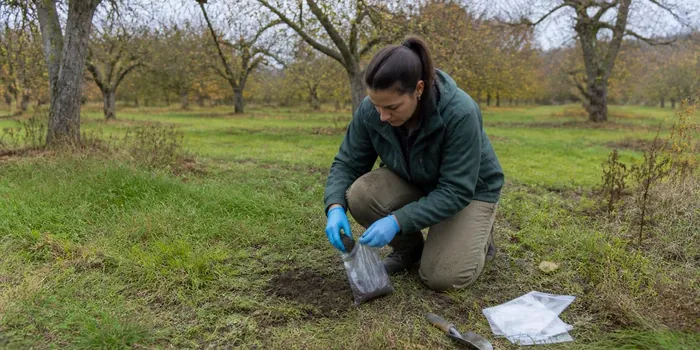
- Collect a representative sample, because residue analytical methods test samples of food, feed and animal commodities, and avoid cross contamination and degradation during transport and storage.
- Prepare and homogenize the sample so that sub-sampling variability stays acceptable.
- Extract the residues into a solvent, since QuEChERS and accelerated solvent extraction are the most common techniques.
- Clean up the extract with dispersive solid-phase extraction, which removes water and undesired co-extractives.
- Separate and detect the analytes by chromatography with mass spectrometry, which provides retention time, mass/charge ratio and relative abundance data.
- Confirm identity by matching the analyte retention time to the calibration standard within 0.1 minute in both GC and LC, then report the result.
Tandem-stage MS methods such as LC-MS/MS or GC-MS/MS monitor 2 ion transitions for identification and confirmation. Regulators recognize this as the generally recognized standard for regulatory monitoring.
A 2022 study by Gabriele Sabbioni found that LC-MS/MS or GC-MS analyzed most urine metabolites with isotope-labeled internal standards.
How Are Samples Prepared for Pesticide Residue Analysis?
To get samples prepared for pesticide residue analysis, start with careful collection and storage of the sample. Make comminution produce a sample homogeneous enough that sub-sampling variability is acceptable. Remove the parts that are not analysed before comminution. Mill cereals, spices and dried herbs to particles preferably smaller than 1 mm. Avoid extensive heating during milling, because heat can cause losses of certain pesticides. Keep the fractions in the ratio of the original laboratory sample, because pesticides can be unevenly distributed between fractions. Withdraw the analytical test portion from this homogeneous material. Pool 5 samples only when the LOQ is at least 5 times lower than the reporting limit. The same holds for the screening detection limit.
What Is the QuEChERS Method for Pesticides?
QuEChERS is a method that simplifies the analysis of multiple pesticide residues in fruit, vegetables, cereals and processed products. QuEChERS stands for quick, easy, cheap, effective, rugged and safe. It is a two-step method of extraction followed by clean-up for pesticides. Anastassiades, Lehotay, Stajnbaher and Schenck published the original method in 2003. The procedure weighs 10 g of sample, adds 10 mL acetonitrile and internal standard, and agitates intensively. The final extract can be analyzed directly by GC- and / or LC-techniques. Dispersive solid-phase extraction with QuEChERS preceded analysis of lagoon sediments in Morocco, where 15 active substances were detected.
What Clean-Up Methods Does Pesticide Residue Analysis Use?
Pesticide residue analysis uses 4 clean-up methods: dispersive SPE with PSA, PSA with C18, solid-phase extraction and liquid-liquid extraction. Key types include:
- Dispersive SPE with PSA: Mixes an aliquot of the upper organic phase with magnesium sulfate and a sorbent such as PSA to remove water and undesired co-extractives. The sorbent choice changes with the matrix.
- PSA with C18: Combines the two sorbents as the reference d-SPE mixture for fatty matrices, removing lipids and sterols. Polar pesticides are the trade-off, because they interact strongly with the sorbents.
- Solid-phase extraction: Cleans and concentrates samples before GC or HPLC analysis. SPE was more economical in time and solvent than LLE and gave the best analyte recovery in urinary dialkylphosphate methods.
- Liquid-liquid extraction: Partitions compounds between two immiscible solvents, typically one aqueous and one organic. LLE and SPE were each used in 36 percent of reviewed urinary dialkylphosphate methods.
A 2024 study by Ana Paula Neves reviewed urinary dialkylphosphate methods and found that SPE gave the best recovery. Recoveries stayed below 60 percent for most pesticides with Log P below 2 when PSA/C18 and Z-Sep cleaned rapeseed extracts. EMR-Lipid sorbent gave good recoveries, LOQs and matrix effects in rapeseed.
Which Instruments Detect Pesticide Residues?
The instruments that detect pesticide residues are GC-MS/MS, LC-MS/MS, IC-MS/MS, QTOF high-resolution MS and Orbitrap high-resolution MS. Triple quadrupole MS is extremely widely used for the quantitative detection of pesticides in complex matrices. GC-MS/MS suits volatile and thermally stable pesticides, while LC-MS/MS suits polar, nonvolatile and thermally unstable compounds. IC-MS/MS handles ionic and polar pesticides such as glyphosate, glufosinate and chlorate. QTOF resolution is usually between 10,000 and 50,000, with mass accuracy up to ppm level. Orbitrap resolution exceeds 100,000 with sub-ppm mass accuracy. Tandem MS methods monitor 2 ion transitions for identification and confirmation, the generally recognized regulatory standard. FDA tests imported and domestic commodities for approximately 800 pesticide residues with these instruments. A study by Gabriele Sabbioni from Ludwig-Maximilians-University Munich found that LC-MS/MS or GC-MS analyzed most urine metabolites.
How Do GC-MS/MS and LC-MS/MS Compare for Pesticide Analysis?
GC-MS/MS and LC-MS/MS compare on analyte volatility, analyte polarity and matrix-effect compensation in pesticide analysis. GC-MS suits volatile and thermally stable pesticides, while LC-MS/MS suits polar, nonvolatile and thermally unstable compounds. GC-MS cannot resolve highly polar, thermally unstable or low-volatility pesticides, which suit IC-MS/MS or LC-MS/MS. Matrix effects occur frequently in both GC and LC methods and are assessed at initial method validation. Analyte protectants added to sample extracts and calibration standards equalise the response of pesticides in GC analysis. Compensation for matrix effects is more difficult to achieve in LC-MS than in GC.
| Attribute | GC-MS/MS | LC-MS/MS |
|---|---|---|
| Analyte volatility and thermal stability | Suits volatile, thermally stable pesticides | Suits nonvolatile, thermally unstable compounds |
| Analyte polarity | Cannot resolve highly polar pesticides | Suits polar compounds |
| Matrix-effect compensation | Analyte protectants equalise the response | Compensation is more difficult to achieve |
20 percent of signal suppression or enhancement is the level above which matrix effects must be addressed in calibration. Standard addition or isotopically labelled internal standards give the most effective compensation. A study published in Environment International in 2022 found LC-MS/MS or GC-MS used for most urine metabolites.
How Are Polar Pesticides Such as Glyphosate Analyzed?
To get polar pesticides such as glyphosate analyzed, start with the QuPPe method. Highly polar pesticides are not amenable to the widely used QuEChERS method. QuPPe uses a one-step, single-phase extraction with a methanol/water mixture. Weigh 10 g of sample, add water if needed and add 10 mL acidified methanol containing 1 percent formic acid. Shake the vessel, freeze out the raw extract, centrifuge it cold and filter it into an autosampler vial. Target analytes are highly polar molecules, typically with log Kow values below -1. Others have permanent or pH-dependent ionic character. Add EDTA solution to complex metal cations, especially when analysing glyphosate. Use isotopically labelled internal standards to correct for volume variations and matrix effects and to assist identification. Analyse the final aqueous extract by LC or IC with tandem MS using HILIC, graphitized carbon or ion chromatography columns. IC-MS/MS needs no derivatization or multiple extraction steps before analysis. QuPPe has been validated for more than 50 highly polar pesticides and metabolites in various matrices. Interlaboratory trials validated a large number of matrix and compound combinations. A 2022 study from Ludwig-Maximilians-University Munich found isotope-labeled internal standards in LC-MS/MS or GC-MS analysis of urine metabolites.
How Does Pesticide Screening Work?
Pesticide screening works by detecting analytes with a fast qualitative method before a validated quantitative method confirms them. Screening methods, especially automated MS-based detection, extend a laboratory’s scope cost-effectively to analytes with a low probability of being present. Full-scan HRAM coupled to UHPLC supports screening of targeted and non-targeted LC-amenable residues, and suspect screening workflows process non-targeted data. The screening detection limit is the lowest concentration detected in at least 95 percent of samples. That limit carries a 5 percent false-negative rate. Basic SDL validation spikes at least 20 samples per commodity group at the estimated SDL. Each batch performance check spikes at least 10 percent of the validated analytes, covering all critical points of the method. A detected analyte is reported only tentatively until a validated quantitative method confirms it. Frequent analytes therefore stay on quantitative methods.
What Are Maximum Residue Limits in Pesticide Testing?
Maximum residue limits in pesticide testing are the highest residue levels that law tolerates in or on food or feed. The European Commission fixes MRLs for all food and animal feed. An MRL applies when pesticides are applied correctly. A tolerance is the EPA-established maximum residue level of a pesticide chemical permitted on food in the United States. Specific US tolerances are listed in 40 CFR Part 180. The EU Pesticides Database lists MRLs in food products and emergency authorisations of plant protection products. An action level is a recommended level of a contaminant not to exceed. A residue of 1 ppm is equivalent to 1 µg of residue in one gram of food sample. An over-tolerance violation is a residue above the EPA limit for a specific food. A no-tolerance violation is a confirmed residue where no tolerance or exemption exists.
How Are Pesticide Analytical Methods Validated?
To get pesticide analytical methods validated, start with spiking blank matrix at the LOQ or RL. Method validation under SANTE/11312/2021 assesses sensitivity, linearity, mean recovery, repeatability RSDr, LOQ, ion ratio and retention time. Spike one higher level too. Run at least 5 replicates at the target LOQ and at one higher level. That level is 2 to 10 times the LOQ or the MRL. Calculate mean recovery and RSDr, and keep mean recovery within 70-120 percent with an RSDr of 20 percent or less. Accept consistent recoveries outside 70-120 percent only when well established. The mean must stay between 30 and 140 percent. Use 60-140 percent as a practical default range for individual recoveries in routine analysis. Check ion ratio and retention time, then set the LOQ at the lowest passing spike level. Submit validation data from the own laboratory plus an additional independent laboratory that confirms the results. Apply a default expanded measurement uncertainty of 50 percent when the laboratory shows its own is below 50 percent.
What Are Pesticide Reference Standards?
Pesticide reference standards are materials with known purity and a unique identification code that gives full traceability. Reference standards are stored at low temperature, preferably in a freezer, with light and moisture excluded. Stock standards need not less than 10 mg of reference standard weighed on a five decimal place balance. Certified reference materials are the preferable evidence of method performance.
Where Are Official Pesticide Analytical Methods Published?
Official pesticide analytical methods are published by EPA, FDA, EURL-SRM and USDA. EPA residue analytical methods test samples of food, feed and animal commodities. Pesticide manufacturers must develop residue analytical methods and provide them to EPA as a requirement of registration. The FDA Pesticide Analytical Manual Volume I has a 3rd edition from 1994. Later revisions and replacement tables keep it current. Since V12 in July 2022 the QuPPe-PO document of EURL-SRM holds 21 chromatographic methods. They cover about 55 analytes. The USDA Pesticide Data Program produces the most comprehensive pesticide residue database in the U.S. SANTE/11312/2021 v2026 provides the quality control and validation guidance for laboratories.
How Is Testing for Pesticide Exposure in People Done?
To get pesticide exposure testing done in people, start with identifying the pesticide. The National Pesticide Information Center advises knowing the product, its EPA registration number or active ingredient. Then identify how it was applied and the exposure route. A published reference value is needed for comparison. Laboratory testing can be very expensive and the results are often difficult to understand. A detection in the body does not by itself prove a meaningful health risk.
Ana Paula Neves reported in Biomedical Chromatography that urinary dialkylphosphates are sensitive and representative biomarkers. They mark environmental and occupational organophosphate exposure. Liquid-liquid extraction and solid-phase extraction were the most used methods, each at 36 percent. Solid-phase extraction gave the best recovery, and 76 percent of the reviewed methods used gas chromatography.
Gabriele Sabbioni reported in Environment International that urine metabolites were mostly analyzed with LC-MS/MS or GC-MS using isotope-labeled internal standards. Quantify the metabolites this way, then compare the result with a published reference value.