Picloram: Uses, Health Effects, Safety and Regulation
Picloram is a systemic pyridine herbicide that controls woody plants and broad-leaved weeds, and most grasses resist it. It has low acute toxicity by mouth and skin, but it is moderately to highly toxic by inhalation. It damages the liver in rats and dogs, and it can cause benign liver tumor nodules in female rats. It does not affect reproduction in the tested animals. Picloram persists in soil for a long time and leaches into groundwater under certain conditions. It is moderately toxic to freshwater fish but practically nontoxic to bees and birds. In the United States it is a restricted use pesticide that only certified applicators may apply. Workers must stay out of treated areas for 12 hours.
What Is Picloram?
Picloram is a systemic pyridine herbicide that controls woody plants and broad-leaved weeds. Picloram has the chemical name 4-amino-3,5,6-trichloropicolinic acid. Manufacturers formulate picloram as an acid, a potassium or triisopropanolamine salt, or an isooctyl ester. These forms come as soluble concentrates, pellets or granules.
The US EPA IRIS record for picloram, CASRN 1918-02-1, dates from 1987. A US EPA fact sheet estimates that producers made 300,000 lbs of picloram in the United States in 1982. That fact sheet gives a water solubility of 430 mg/L at 25 C. The NHMRC report places picloram in the pyridinecarboxylic acid class with clopyralid, fluroxypyr and triclopyr.
What Is Picloram Used For?
Picloram is used to control woody plants and a wide range of broad-leaved weeds, and most grasses resist it. Picloram serves pastures, rangeland, turf, industrial areas, rights-of-way and roadsides in the United States. Wisconsin applies picloram mostly to brush control and forestry site preparation. Australia uses picloram as a post-emergent herbicide for cereal crops, conservation areas, parks and home gardens.
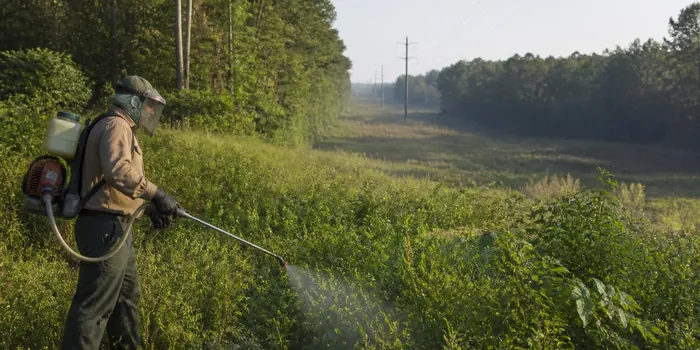
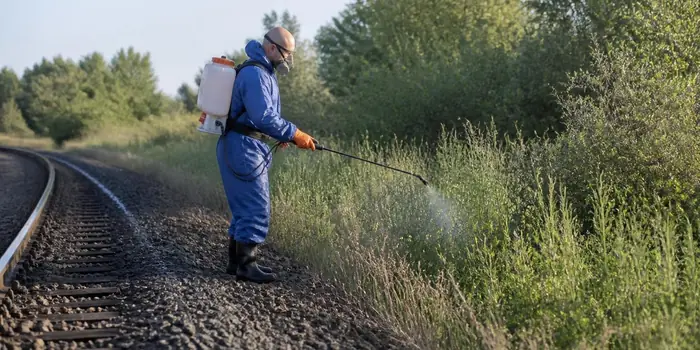
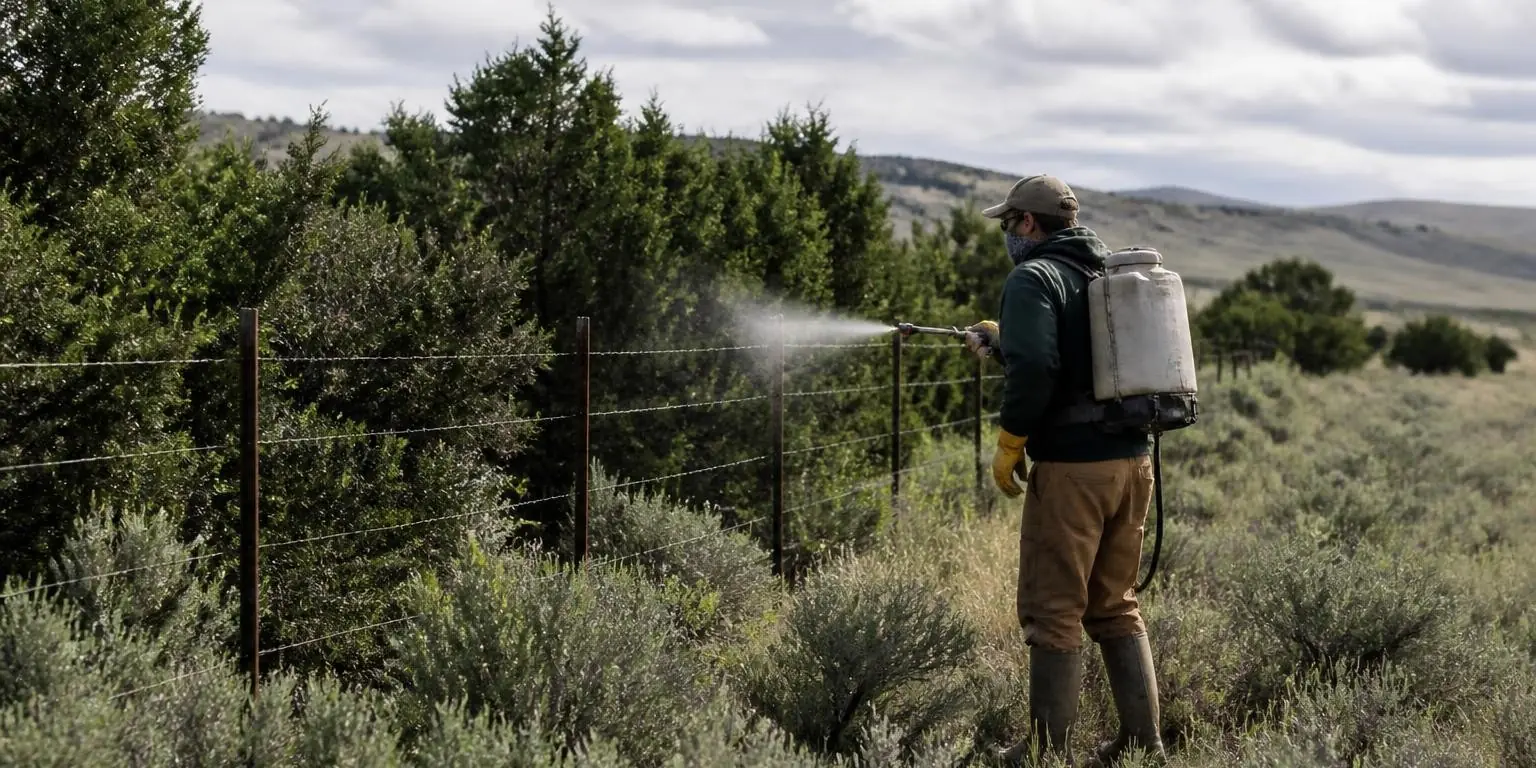
Picloram controls bitterweed, knapweed, leafy spurge, locoweed, larkspur, mesquite, prickly pear and snakeweed on western rangeland. Applicators spray the foliage of actively growing plants. They treat the basal bark or cut surface of woody plants. Only certified applicators may apply these restricted use products.
A Montana roadside study applied 0.28 kg/ha of picloram to a valley bottom terrace in the spring of 1985. That study targeted spotted knapweed (Centaurea maculosa) in the northern Rockies.
Herbicide formulations can pair picloram with 2,4-D. A 2002 study by Oakes at the University of Sydney tested one such mixture in rats.
Is Picloram Acutely Toxic?
It depends. Picloram has low acute toxicity by mouth and skin, but picloram is moderately to highly toxic by inhalation. Acutely, picloram is toxic mainly through the lungs, not through ingestion or skin contact.
The 1996 EXTOXNET Pesticide Information Profile for picloram reports oral LD50 values above 5000 to 8200 mg/kg in rats. Rabbits show a dermal LD50 above 4000 mg/kg, with no mortality or toxic signs. Technical grade picloram has a 4-hour inhalation LC50 above 0.35 mg/L. Technical picloram causes moderate eye irritation in rabbits.
The Wisconsin report calls inhalation of picloram highly toxic and its derivatives moderately toxic. EXTOXNET rates technical grade picloram moderately toxic by inhalation. The Wisconsin report rates picloram acute toxicity as low to moderate, depending on exposure level. Long-term exposure targets the liver instead, as the next sections describe.
Does Picloram Damage the Liver?
Yes. Picloram damages the liver in rats and dogs, with increased liver weight and enlarged liver cells. The liver and kidneys are the target organs of picloram in animal studies.
Long-term diet studies in rats and dogs at 60 mg/kg bw/day and above showed increased liver weight. The NHMRC report adds enlarged hepatocytes and liver discolouration. The critical effect behind the EPA oral reference dose is hepatic, based on increased liver weights. Subchronic studies in the Wisconsin report found liver changes too.
The lowest long-term no-observed-effect level is 20 mg/kg bw/day in the rat. EXTOXNET reports liver effects in rats above 225 mg/kg/day over 90 days. A 1988 study by G F Reidy at the University of Sydney tested picloram at 100 mg/kg/day for 7 days. Male rat liver microsomes showed a 48% decrease in 16 alpha-hydroxylase activity.
Can Picloram Cause Cancer or Genetic Damage?
It depends. Picloram can cause benign liver tumor nodules in female rats. The EPA still assigns it to Group E, a non-carcinogen group for humans. Picloram is not considered to cause genetic damage in short-term tests.
The EPA Integrated Risk Information System has not assessed the cancer risk of picloram. That program did not re-assess chemicals used as pesticides.
Male rats fed picloram for 80 weeks showed no carcinogenicity, but females developed benign liver tumor nodules. The male rats received 17.5 mg/kg/day or about 40 mg/kg/day and stayed under observation for 33 more weeks. Mice fed 18 and 30 mg/kg/day for 80 weeks showed no carcinogenic effects. Hexachlorobenzene contaminants may interfere, so some cancer data are hard to interpret.
One mutation test with picloram was positive in yeast, while the Ames test was negative. The NHMRC report concludes that short-term in vitro and in vivo studies show no genotoxicity.
Does Picloram Affect Reproduction?
No. Picloram does not affect reproduction in the tested animals, and picloram caused no developmental effects at the tested doses. Maternal toxicity appeared only at high doses.
Picloram caused no effects on reproductive parameters in two- and three-generation rat studies, says the NHMRC report. Developmental studies in rats and rabbits found no evidence of effects on foetal development. The Wisconsin report finds no association of picloram with reproductive or developmental toxicity.
Pregnant rats exposed to about 180 mg/kg/day showed no changes in fertility. Rats given 1000 mg/kg/day in multigeneration studies showed no effects on fertility or fecundity. Offspring of rats given 400 mg/kg/day during gestation showed no teratogenic effects. At 2000 mg/kg/day, maternal toxicity occurred without malformation in the pups.
In a 2002 study, D J Oakes found no change in litter size, fetal weight or malformation rate. The male-mediated rat study used a herbicide formulation of 2,4-D and picloram.
What Symptoms Does Picloram Exposure Cause?
The symptoms of picloram exposure include nervous system damage, weakness, diarrhea, weight loss, liver damage and eye irritation. Picloram exposure above the 0.5 mg/L drinking water limit causes the first four effects acutely. Key symptoms include:
- Central nervous system damage: Damage to the central nervous system is a possible effect of acute exposure above the drinking water limit. No human intoxication has been documented, so acute symptoms are hard to characterize.
- Weakness: Weakness appears among the acute effects above the same limit. The data come from animal tests, not from human cases.
- Diarrhea: Diarrhea is another possible acute effect above the limit. Picloram is readily absorbed in the gastrointestinal tract.
- Weight loss: Weight loss follows acute exposure above the limit. Rapid excretion limits the burden, since urine clears almost all picloram within 48 hours.
- Liver damage: Liver damage results from long-term exposure above the limit. This effect is chronic, not acute.
- Eye irritation: Technical picloram causes eye irritation in animal tests. Picloram esters and salts are skin sensitizers in guinea pigs.
Reidy examined the liver enzymes that picloram induces and decreases in a 1988 study in Biochemical pharmacology.
How Long Does Picloram Persist?
Picloram persists in soil for a long time. Its soil half-life ranges from 30 to 513 days, depending on the rate applied and conditions. Picloram is the most persistent of the chlorobenzoic acid herbicides. A US EPA fact sheet reports soil half-lives of 55 to 100 days or more.
Montana valley bottom soil kept 36 percent of applied picloram after 90 days. It kept 13 percent after 365 days and 10.5 percent after 445 days. In the spring of 1986, 1.12 kg/ha of picloram went onto both sides of a minimal construction logging road. Photodegradation caused important losses during the first 7 days after treatment at both sites.
The photolysis half-life of picloram in water ranges from 2.3 to 41.3 days. The 2021 EPA release EPA Takes Action to Prevent Ecological Risks from Two Herbicides says compost residues persist.
Does Picloram Leach Into Groundwater?
Yes. Picloram leaches into groundwater under certain conditions, and the product label says so. Picloram is highly soluble in water and has a high leaching risk, especially at high application rates.
Picloram is not expected to adsorb to soil. It has been detected in some groundwater samples, says a US EPA fact sheet. The soil sorption coefficient (Koc) of picloram averages 13, which indicates moderate mobility. Groundwater contamination may result where soils are permeable, particularly where the water table is shallow.
Picloram binding to humic materials in moist soils may decrease leaching. Watson, Rice and Monnig reported in 1989 on Environmental fate of picloram used for roadside weed control. At their mountain watershed site, 78 percent persisted after 90 days, and picloram was not detected in surface or groundwater.
How Toxic Is Picloram to Fish?
Picloram is moderately toxic to freshwater fish, and sensitivity varies by species and test length. Picloram is slightly toxic to invertebrates, says the Wisconsin report.
Picloram is acutely toxic to rainbow trout at 36 mg/L in a 96-hour test. Bull trout are twofold more sensitive than rainbow trout in growth tests. Their 30-day maximum acceptable toxic concentration is 0.80 mg/L, against 1.67 mg/L for rainbow trout. A 2009 ecological risk assessment of picloram to bull trout and rainbow trout reports these values. It appeared in Archives of Environmental Contamination and Toxicology in 2009.
A worst-case exposure estimate for a standard one-hectare water body gave 0.73 mg/L of picloram. Picloram is not expected to bioconcentrate in fish, with a bioconcentration factor of 31. Applied to the label, picloram poses little acute or chronic risk to bull trout and rainbow trout. Limiting applications near aquatic environments limits this potential impact.
Is Picloram Toxic to Bees and Birds?
No. Picloram is practically nontoxic to bees and birds, though EPA bee studies remain in review. The 2022 University of Wisconsin-Madison WI DNR Pesticide Assessment for picloram rates picloram practically nontoxic to bees, birds and mammals.
Ducks, pheasants and quail show an acute oral LD50 of 2000 to 5000 mg/kg. EXTOXNET rates picloram slightly to practically nontoxic to birds. An EPA assessment notes some uncertainty from the avian studies used in risk assessment.
Picloram bee data remain incomplete: chronic toxicity studies on adult and larval honey bees are in review at the EPA. A honey bee acute larval oral study is still outstanding, and the registrant has requested a waiver.
How Is Picloram Regulated in the United States?
Picloram is regulated in the United States as a restricted use pesticide that only certified applicators may apply. The EPA applies this classification to every picloram product except Tordon RTU and Pathway. People under the direct supervision of certified applicators may apply them as well.
Picloram has been registered in the United States since 1964. The EPA classified picloram as a restricted use product in 1978 after reports of phytotoxicity and water contamination. Product labels carry the signal word CAUTION.
The Federal Insecticide, Fungicide, and Rodenticide Act requires the agency to re-evaluate pesticides periodically through registration review. The Environmental Protection Agency released the interim decision for picloram on October 22, 2021. That decision finalized enforceable limits on spray drift. The limits set a maximum wind speed, medium or coarse droplets and mandatory spray release heights.
What Compost Restrictions Apply to Picloram?
Picloram compost restrictions apply as an off-site ban, a grazing wait, a notice record, a pictogram and a stewardship program. These restrictions prevent contaminated compost from damaging non-target plants. Key restrictions include:
- Banning off-site compost use: Treated plant material and manure from grazing animals may not go off-site to compost, bedding or feed for 18 months after application. This ban protects compost buyers, but it limits what land managers can do with the material.
- Requiring a grazing wait: Livestock must graze untreated forage for 3 days before moving to a site where manure is collected or sensitive crops are grown. The wait protects those sites but adds a step for ranchers.
- Keeping a notice record: Pasture applicators must notify property owners and keep a record of that notice for 2 years. The record proves compliance but adds paperwork.
- Printing a label pictogram: Product labels carry an updated compost pictogram. The pictogram warns users at the point of use.
- Running a stewardship program: Registrants must run a stewardship program with educational outreach for applicators and land managers. Outreach spreads the rules but relies on voluntary uptake.
The Environmental Protection Agency has worked with stakeholders for many years to find effective measures. Contaminated compost forms when treated materials, or manure from animals that ate them, are collected and recycled into compost. Its residues persist and damage non-target plants in residential gardens and other sites.
Is Picloram Approved in the European Union?
Yes. The European Union approved picloram as a herbicide on 1 January 2009. The 2024 European Food Safety Authority opinion assessed the toxicological profile of picloram under Directive 91/414/EEC. The renewal of that approval is not yet completed.
The representative use of picloram in that assessment was a spray treatment on winter or spring oilseed rape. The renewal of the first approval is on-going, so the approval status stays open.
What Limits Apply to Picloram in Drinking Water?
The drinking water limits that apply to picloram include a US maximum contaminant level of 0.5 mg/L. The US maximum contaminant level goal for picloram is 0.5 mg/L as well. Australia sets a health-based guideline of 0.3 mg/L.
For a 10 kg child drinking 1 liter daily, 20 mg/L is considered safe for 1 to 10 days. The same child can drink 0.7 mg/L for up to seven years. The longer exposure guideline is lower than the 1 to 10 day value.
Picloram in drinking water from a spillage or misuse is no health concern unless the concentration exceeds 0.3 mg/L. Liquid chromatography with mass spectrometry measures picloram in drinking water with a detection limit of 0.01 micrograms per liter. A 2000 study by R A Howd names picloram among the first 26 chemicals given California public health goals.
What Reference Doses Apply to Picloram?
Reference doses apply to picloram differently by agency, because each agency uses its own study, safety factor and date. The EPA IRIS oral reference dose is 7 x 10 -2 mg/kg-day, with a composite uncertainty factor of 100. The IRIS record last updated that value on 09/30/1987.
A 2000 Federal Register notice calculated a reference dose of 0.20 mg/kg/day. Existing US tolerances use less than 1 percent of that reference dose.
Australia sets an acceptable daily intake of 0.07 mg per kg of body weight. That value rests on a no-observed-effect level of 7 mg/kg bw/day in dogs. The safety factor holds 10 for interspecies extrapolation and 10 for intraspecies variation.
The EU peer review under Directive 91/414/EEC derived an acceptable daily intake of 0.3 mg/kg bw per day. The acute reference dose is 0.3 mg/kg bw as well. The 2024 European Food Safety Authority study reports both EU values.
Which Residue Limits Apply to Picloram in Food?
The residue limits that apply to picloram in food cover three groups. Honey: proposed maximum residue level 0.05 mg/kg. Flowering brassica such as broccoli and cauliflower: proposed 0.08 mg/kg. Animal commodities such as fat and liver: no change to existing limits.
EFSA (European Food Safety Authority) proposed the honey limit in 2024, with a limit of quantification of 0.01 mg/kg. The enforcement residue in honey is picloram, free and conjugated, expressed as picloram. Corteva Agriscience submitted the application to the Netherlands under Article 6 of Regulation (EC) No 396/2005.
The highest long-term dietary intake of picloram residues was 2 percent of the acceptable daily intake, for a Dutch toddler. EFSA used revision 3.1 of its Pesticide Residues Intake Model (PRIMo). The conclusions are indicative, since the renewal and the review of existing limits are not yet finalised.
What Personal Protective Equipment Does Picloram Require?
The personal protective equipment that picloram requires is chemical-resistant gloves as the baseline, plus labeled clothing for handlers. Key items include:
- Wearing chemical-resistant gloves: Gloves of Category A, such as barrier laminate, butyl rubber or nitrile rubber at least 14 mils thick, are required by the label. Gloves are the minimum baseline for every picloram use.
- Wearing labeled clothing: Handlers wear a long-sleeved shirt, long pants, shoes plus socks, and gloves. This single layer protects the skin but depends on correct use.
- Discarding contaminated items: Drenched or heavily contaminated clothing and absorbent materials must be discarded and not reused. Disposal removes a source of repeat exposure but adds cost.
The 2020 US EPA Proposed Interim Registration Decision for picloram assumed handlers wore labeled PPE. The human health risk from picloram falls on applicators and handlers only. The Worker Protection Standard may reduce or modify handler PPE requirements. The cancer risk estimates for hexachlorobenzene reflect labeled single layer clothing and gloves.
How Long Must Workers Stay Out of Picloram-Treated Areas?
Workers must stay out of picloram-treated areas for a restricted entry interval of 12 hours after application. Picloram labels set this 12 hour interval for workers.
The 1995 US EPA Facts sheet on picloram states that the EPA decision requires a 12 hour interval. The EPA assessment finds the 12 hour interval protective for post-application activities.
Picloram early entry under the Worker Protection Standard requires the label protection for contact with treated plants, soil or water.